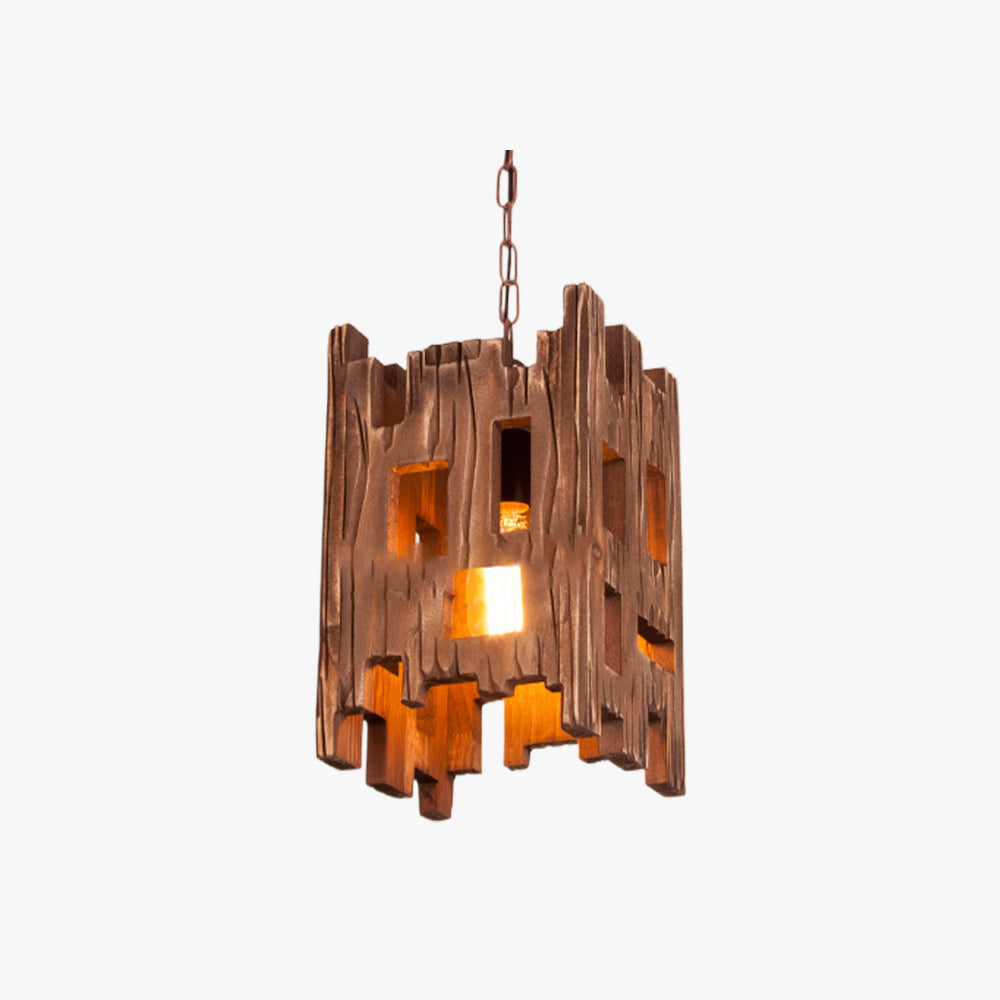
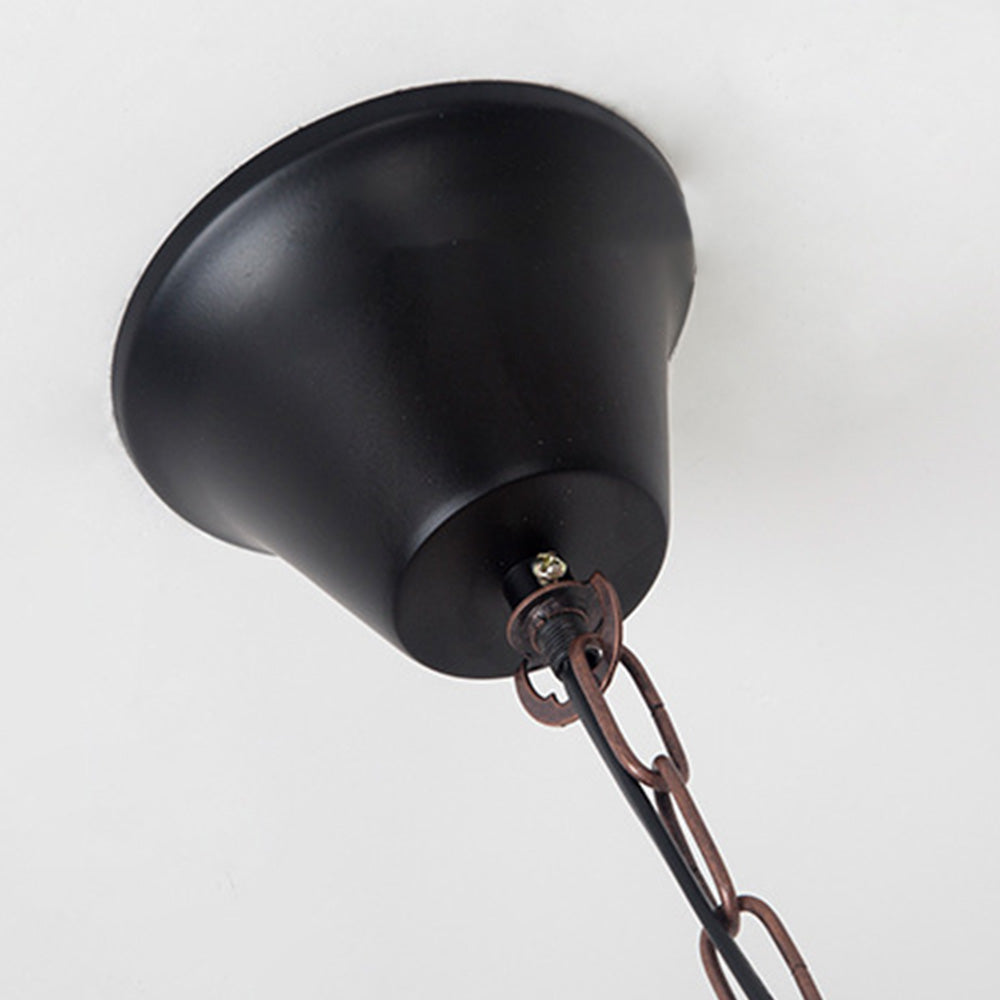
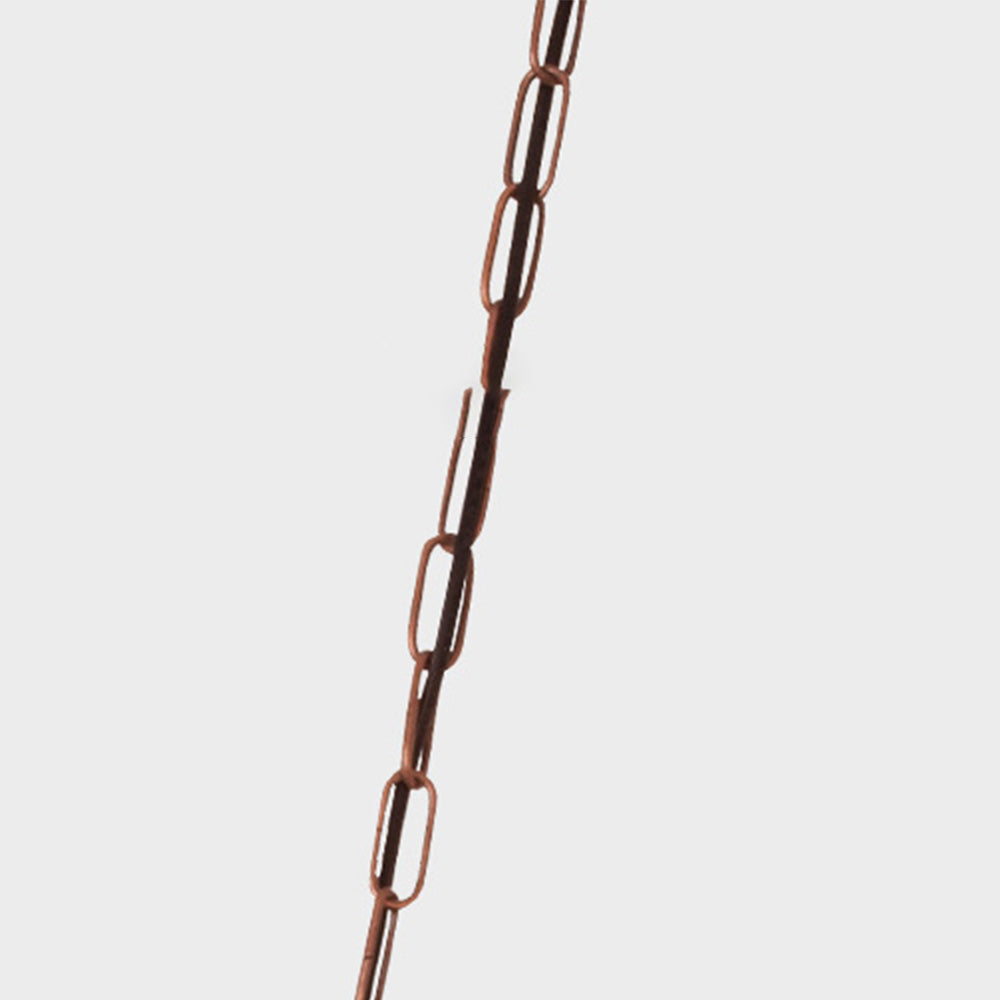
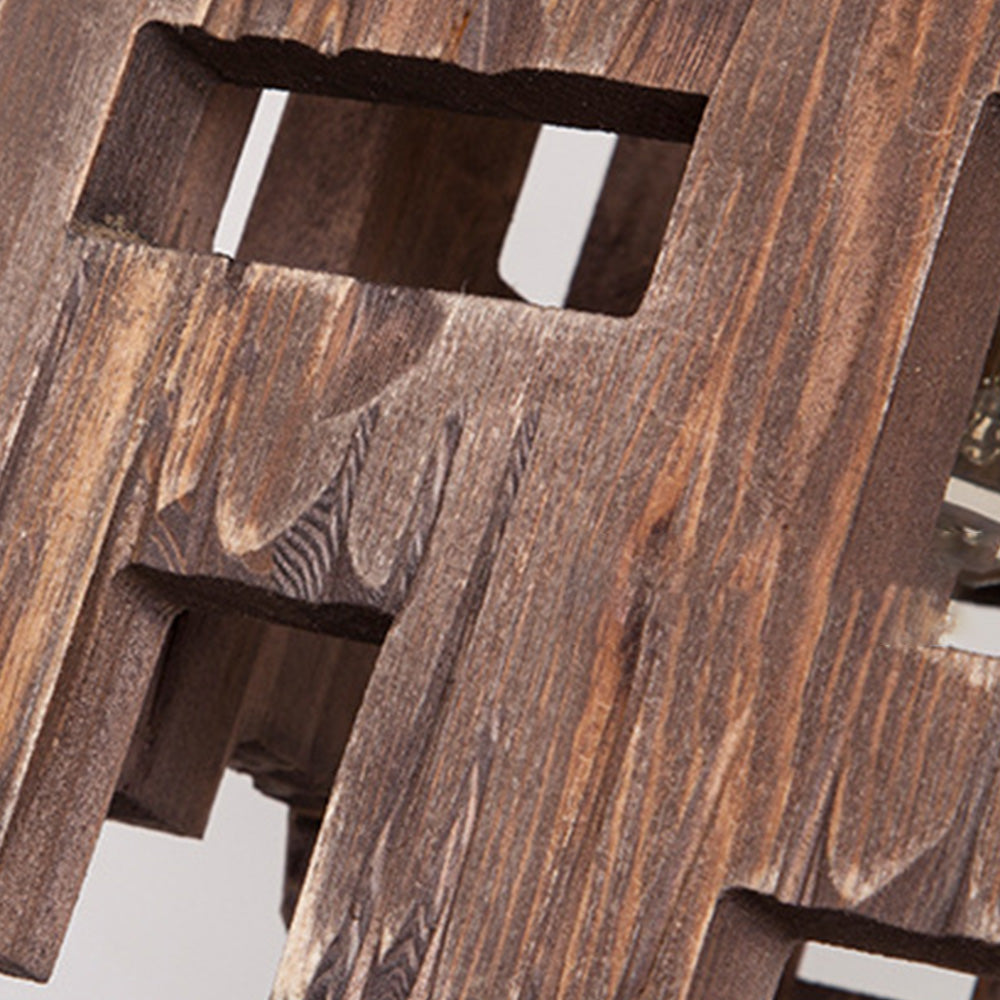
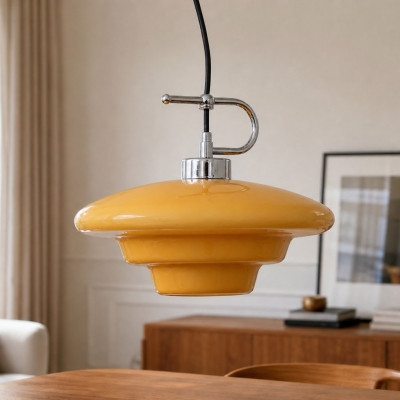
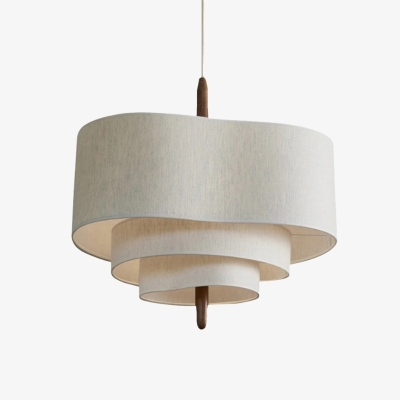
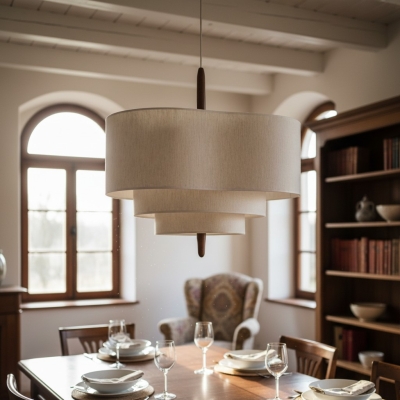
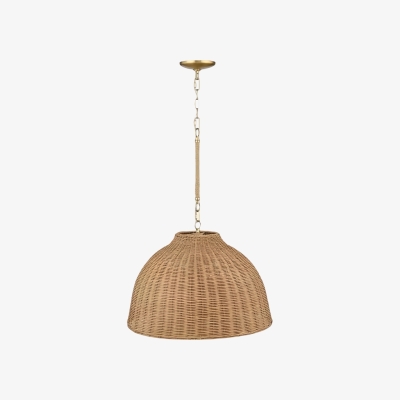
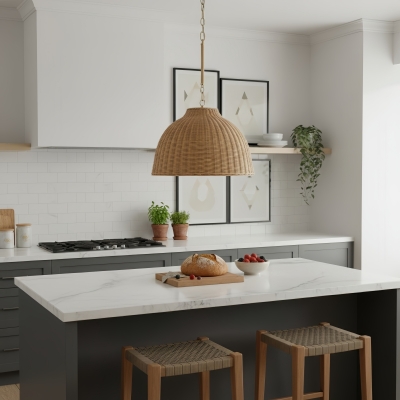
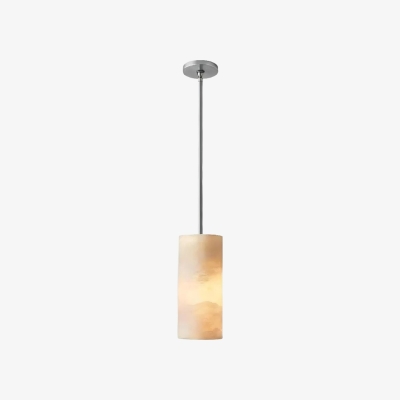
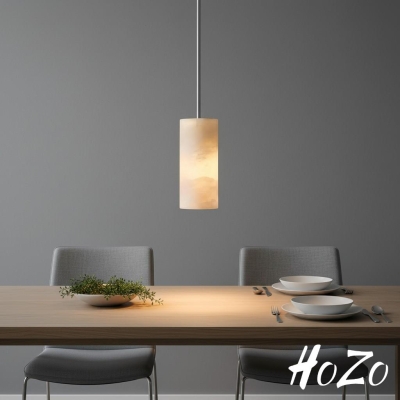
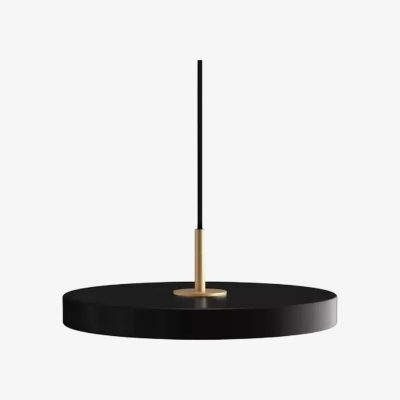
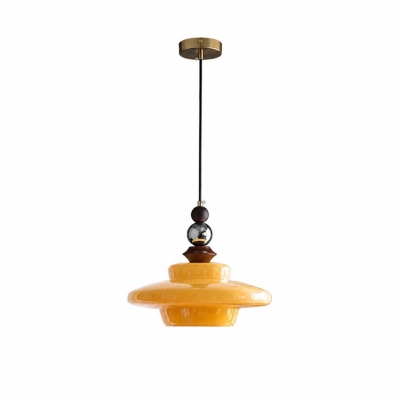
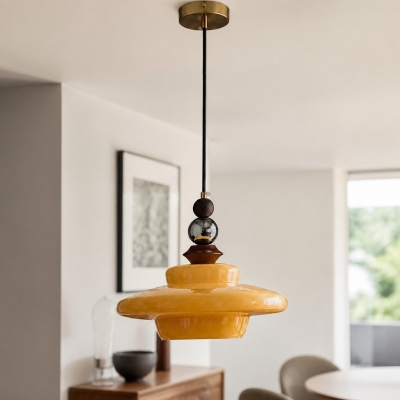
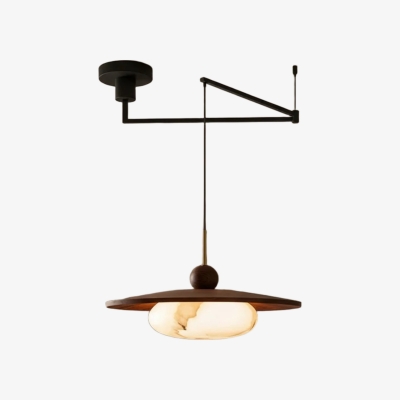
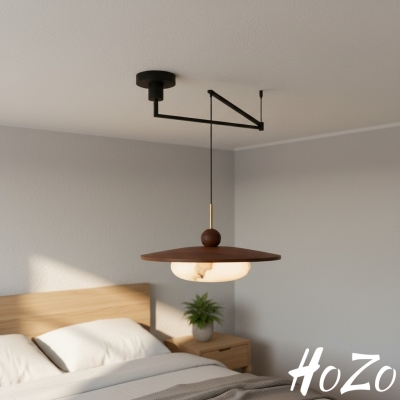
The wood pendant light seamlessly marries two essential materials - metal and wood. The metal fixture is not only robust but also equipped with anti-corrosion and anti-rust properties, ensuring it remains strong and visually appealing over time. The solid wood shade is a testament to durability and heat resistance, guaranteeing it can withstand the daily use.
This pendant light boasts a wood color that captures the essence of retro style. The warm and nostalgic of wood evoke an artistic and retro atmosphere in any space it graces. It brings a touch of timeless charm that resonates with those who appreciate vintage aesthetics.
The standout feature of this pendant light is its hollowed-out rectangular lampshade. This design is not just beautiful and lovely but also exceptionally space-efficient. The compact design ensures that this pendant light maximizes space usage while maintaining a captivating and visually striking presence.
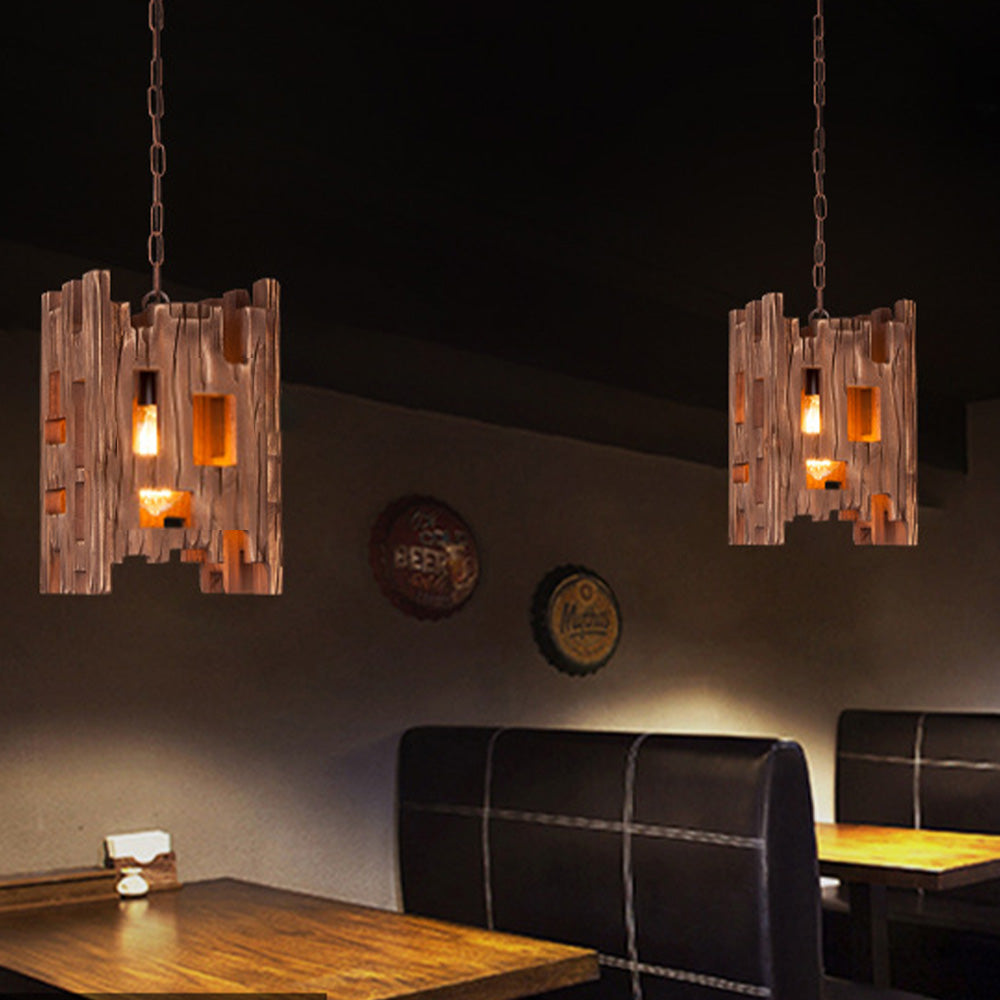
The versatility of this wood pendant light is one of its strengths. It serves as a remarkable decoration for various settings, including the living room, dining room, bedroom, bars, office, and cafe. Whether in residential or commercial spaces, it elevates the ambiance and adds an artistic and retro touch.
This wood pendant light embodies a captivating blend of artistic and retro style elements. It's a fusion of durability and aesthetics, making it a perfect choice for those who appreciate both form and function. Its wood color, combined with the distinctive hollowed-out rectangular shape, creates an aesthetic that's timeless and inviting.
Product Info
Type
Pendant Light
Style
Austin
Suggested Space Fit
Living Room, Dining Room, Bedroom
Suggested Room Size
6㎡-15㎡
Indoor or Outdoor Use
Indoor
Dimmable
/
Color Temperature
/
Smart Enabled
No
Need Assembly
Yes
IP Rate
IP20
Power Source
Hardwired
Power Info
Bulb Included
/
Bulb Type
LED
Bulb Base
E26
Number of Bulb
/
Voltage (V)
110V-240V
Maximum Wattage(W)
/
Product Material
Primary Product Material
Pine Wood + Metal
Fixture Product Material
Pine Wood
Shade Product Material
Metal
Product Measurements & Weights
Product Weight
2.5Kg
Chain/Cord Adjustable or Not
Yes
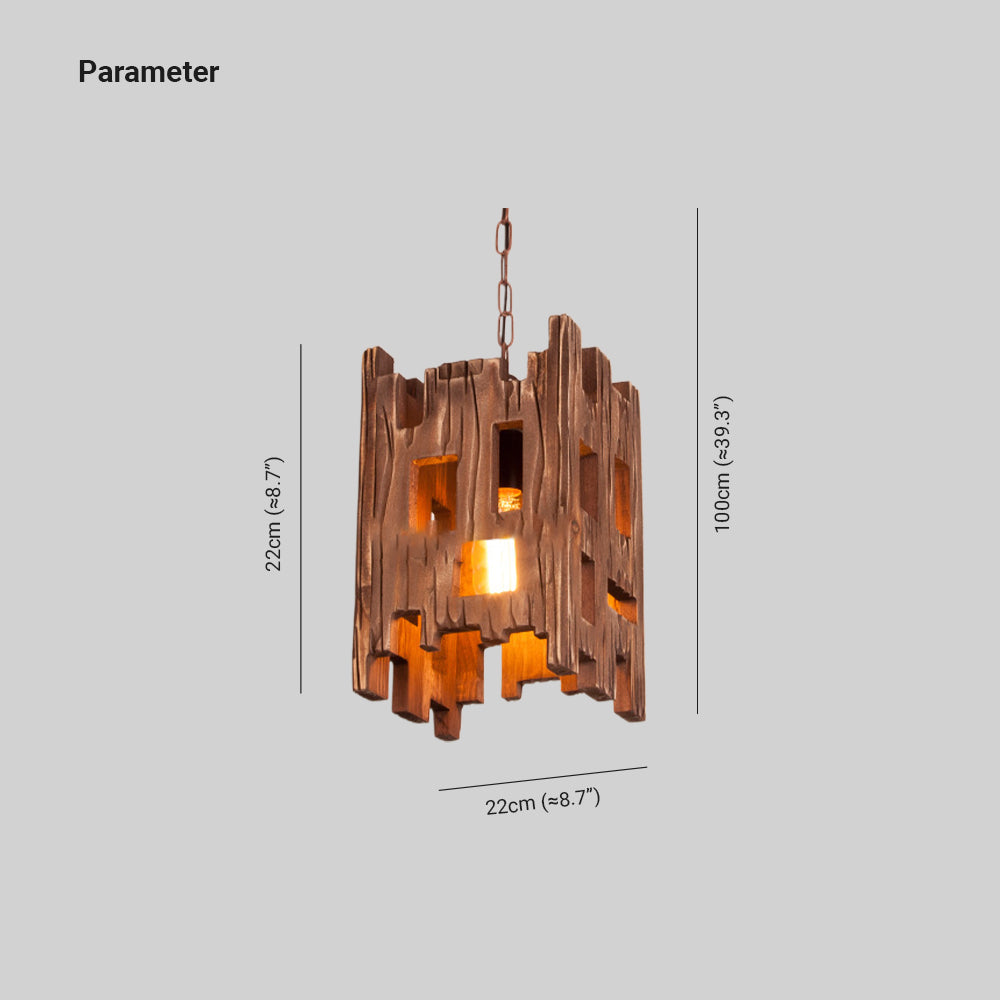
Size
See Images
Included Components
1* Pendant Light
Note
Please kindly note that there may be an error of 1-3cm of the size due to manual measurement. The pictures may have slight chromatism due to the light and the monitor. We appreciate your understanding in advance. It's recommended that the installation of the lamp is performed by a professional electrician.
HOZO Installationsanleitung
Planen Sie Ihre Beleuchtung.
Raumweise Startwerte für Leuchtengröße, Montagehöhe, Abstand und Durchgangshöhe. Tippen Sie ein Kapitel an.
01
Esstisch
Größe und Mitte vom Tisch aus festlegen, dann die Sicht von jedem Sitz prüfen.
So messen
Tischlänge und -breite messen. Bei runden Tischen den Durchmesser nehmen.
Startbereich
Runde Leuchten: etwa 1/2 bis 2/3 der Tischbreite. Längliche Leuchten: 1/2 bis 2/3 der Tischlänge.
Platzierung
Die Leuchte über dem Tisch zentrieren, nicht zwingend über dem Raum.
Abstand
76–91 cm über der Tischplatte beginnen.
Bei langen Tischen wirken zwei kleinere Pendel oft natürlicher als eine übergroße Leuchte.
Vor dem Bohren
Eine Papierschablone an die Decke kleben und vom Türrahmen sowie sitzend prüfen.
MessenPlatte bis Unterkante
Hängehöhe76–91 cm
AusrichtenMitte des Tisches
02
Kücheninsel
Die nutzbare Insel messen und die Pendel auf der Mittellinie halten.
So messen
Nutzbare Länge und Breite der Insel messen.
Startbereich
Eine Linienleuchte: 1/2 bis 2/3 der Insel-Länge. Mehrere Pendel: erst den Durchmesser, dann die Anzahl wählen.
Platzierung
Pendelmitten gleichmäßig auf der Insel-Mittellinie.
Abstand
76–91 cm über der Arbeitsplatte. Äußere Pendel nicht an den Inselenden.
Die komplette Reihe mocken, nicht nur ein Pendel.
Vor dem Bohren
Drei Papierkreise über der Insel zeigen Abstandsprobleme schneller als ein einzelnes Muster.
MessenPlatte bis Unterkante
Hängehöhe76–91 cm
AusrichtenGleiche Mitten
03
Raummitte
Länge plus Breite ergibt den Startdurchmesser. Deckenhöhe und visuelle Schwere machen die Entscheidung fertig.
So messen
Raumlänge und -breite in Metern plus fertige Deckenhöhe.
Startbereich
Länge + Breite (m) × 8,3 ergibt einen üblichen Startdurchmesser in cm. Beispiel: 3,7 + 3,0 → ca. 56 cm.
Platzierung
Die architektonische Mitte nur nutzen, wenn sie vom Eingang und vom Möbelplan her Sinn ergibt.
Abstand
Mindestens 2,10 m lichte Höhe unter dem tiefsten Punkt im Laufbereich.