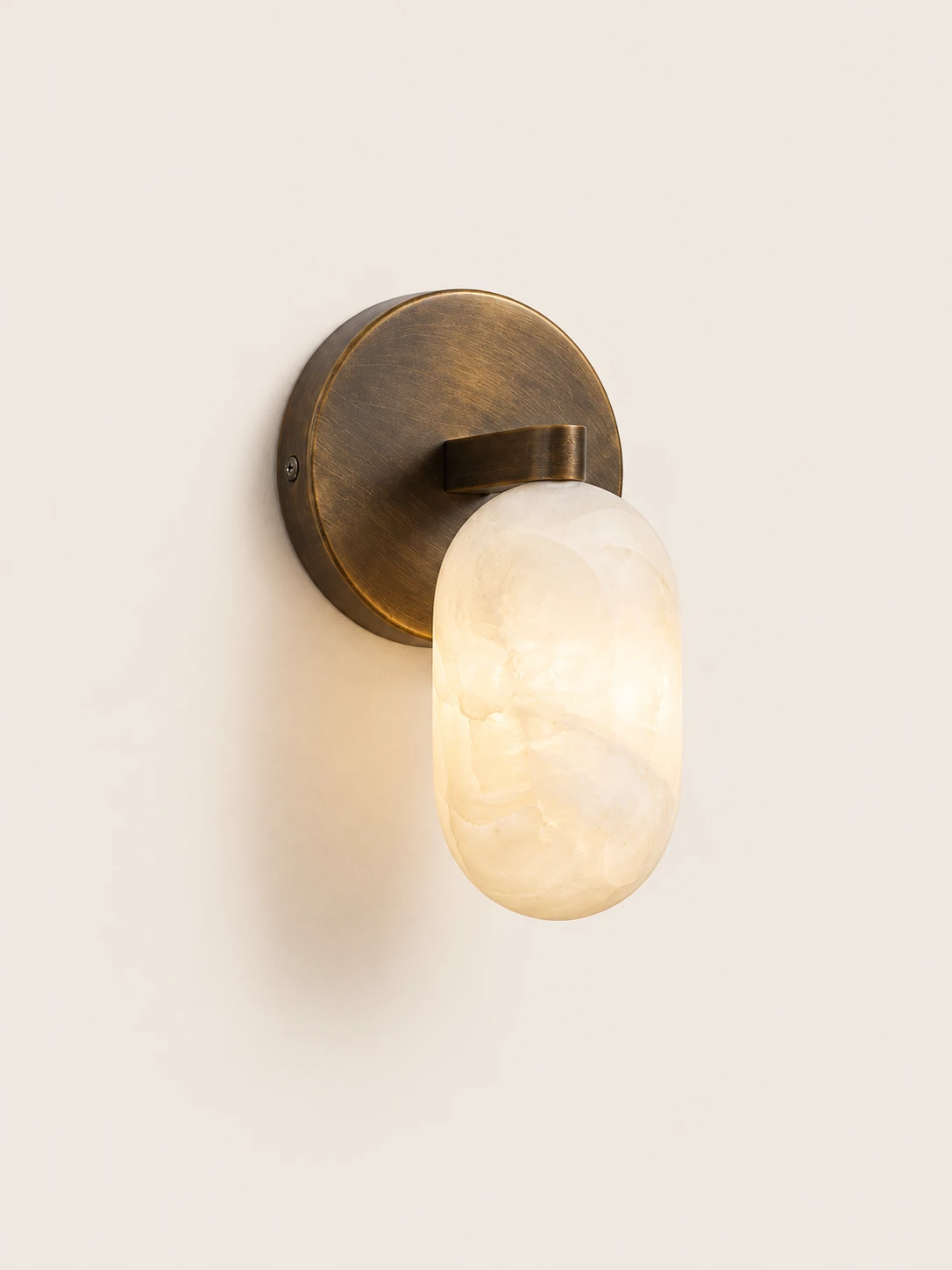
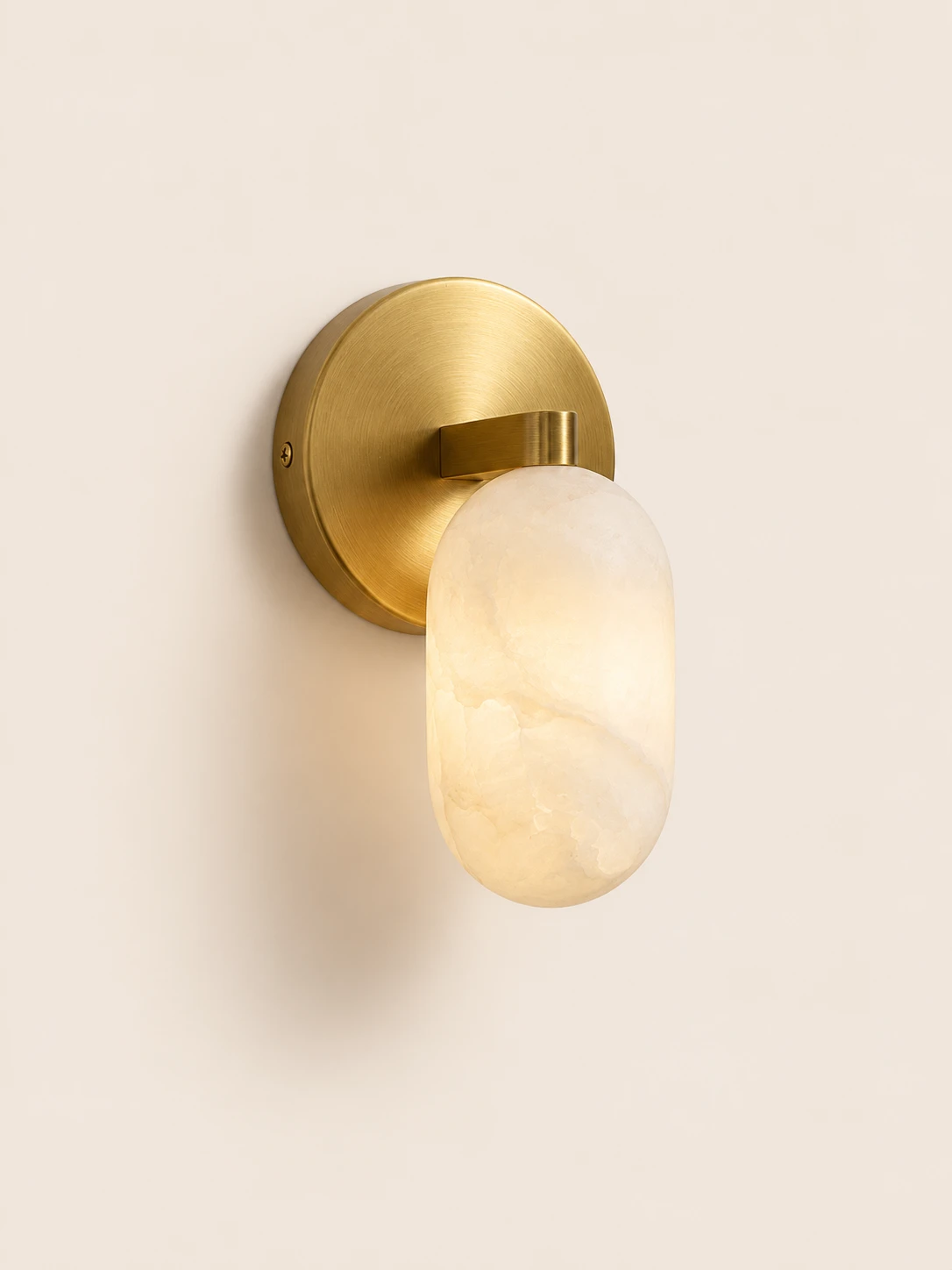
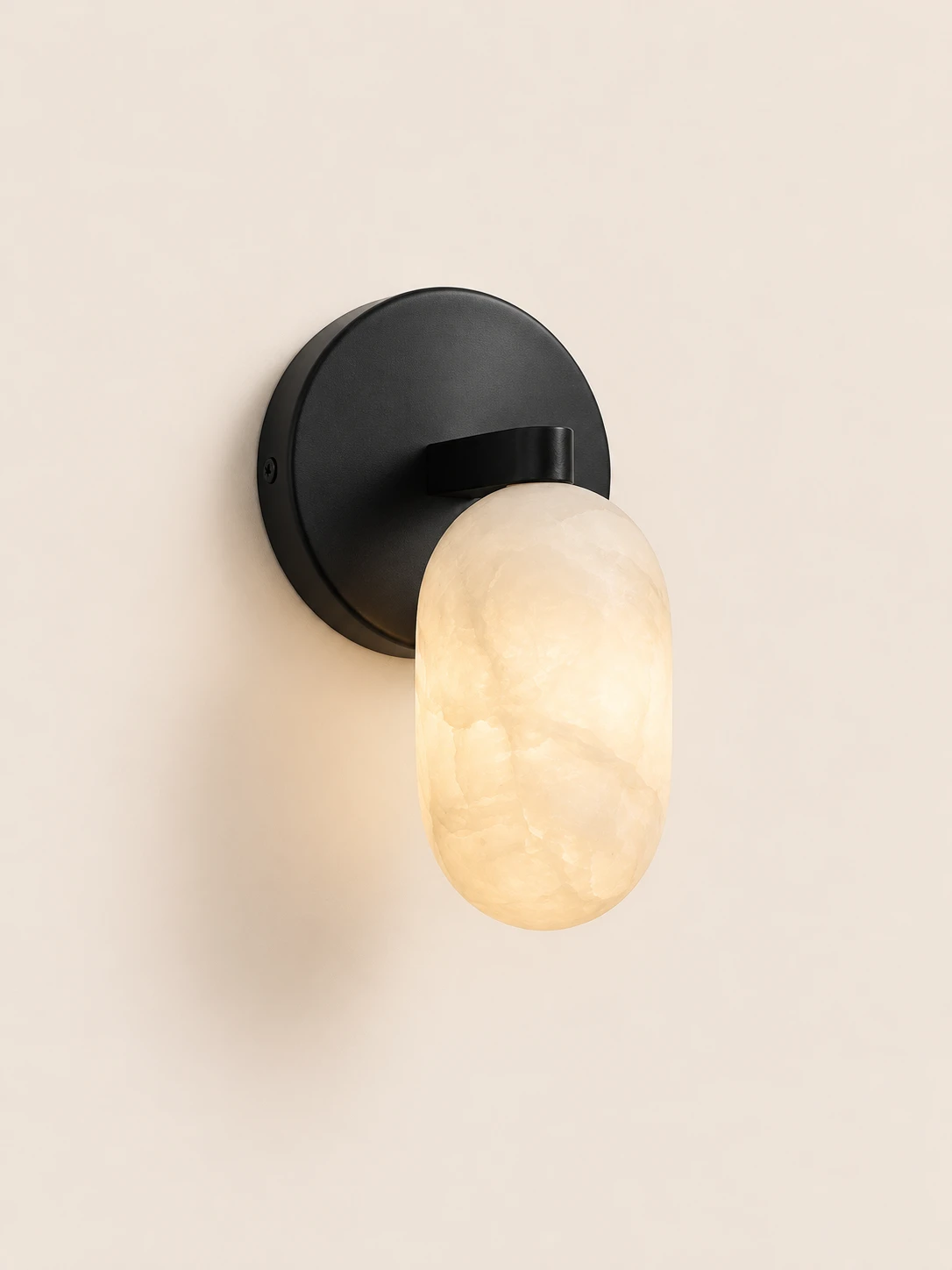
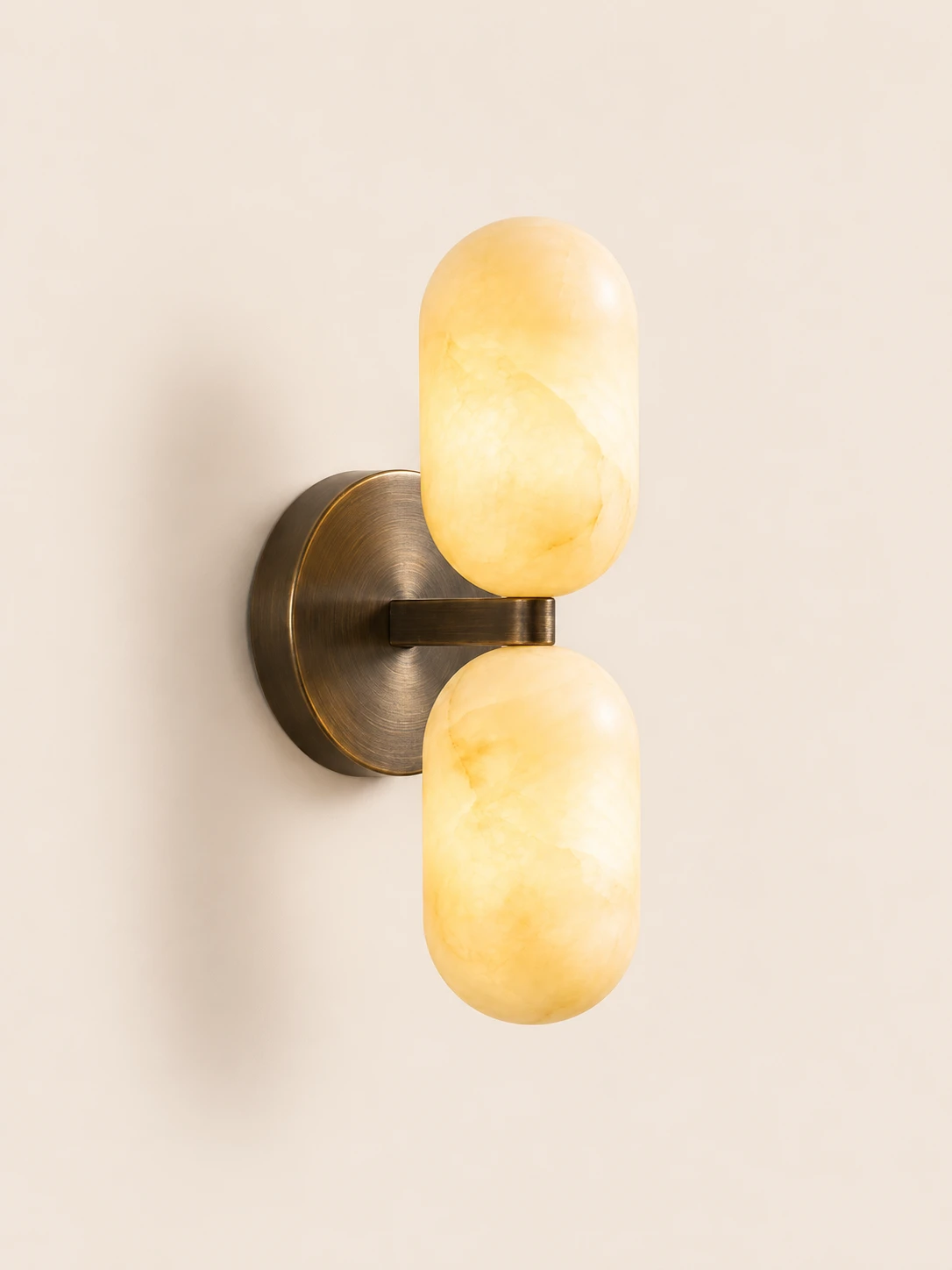
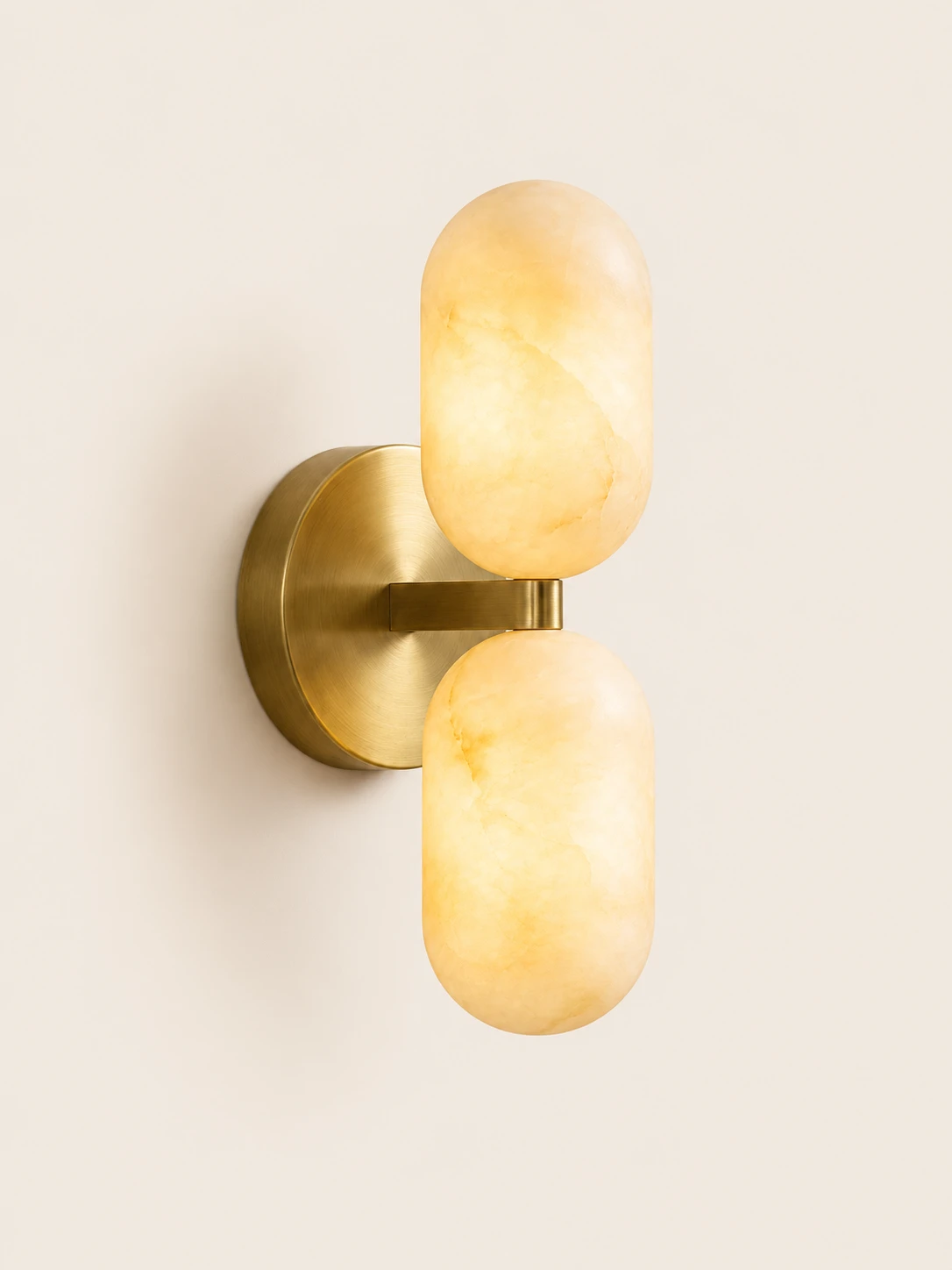
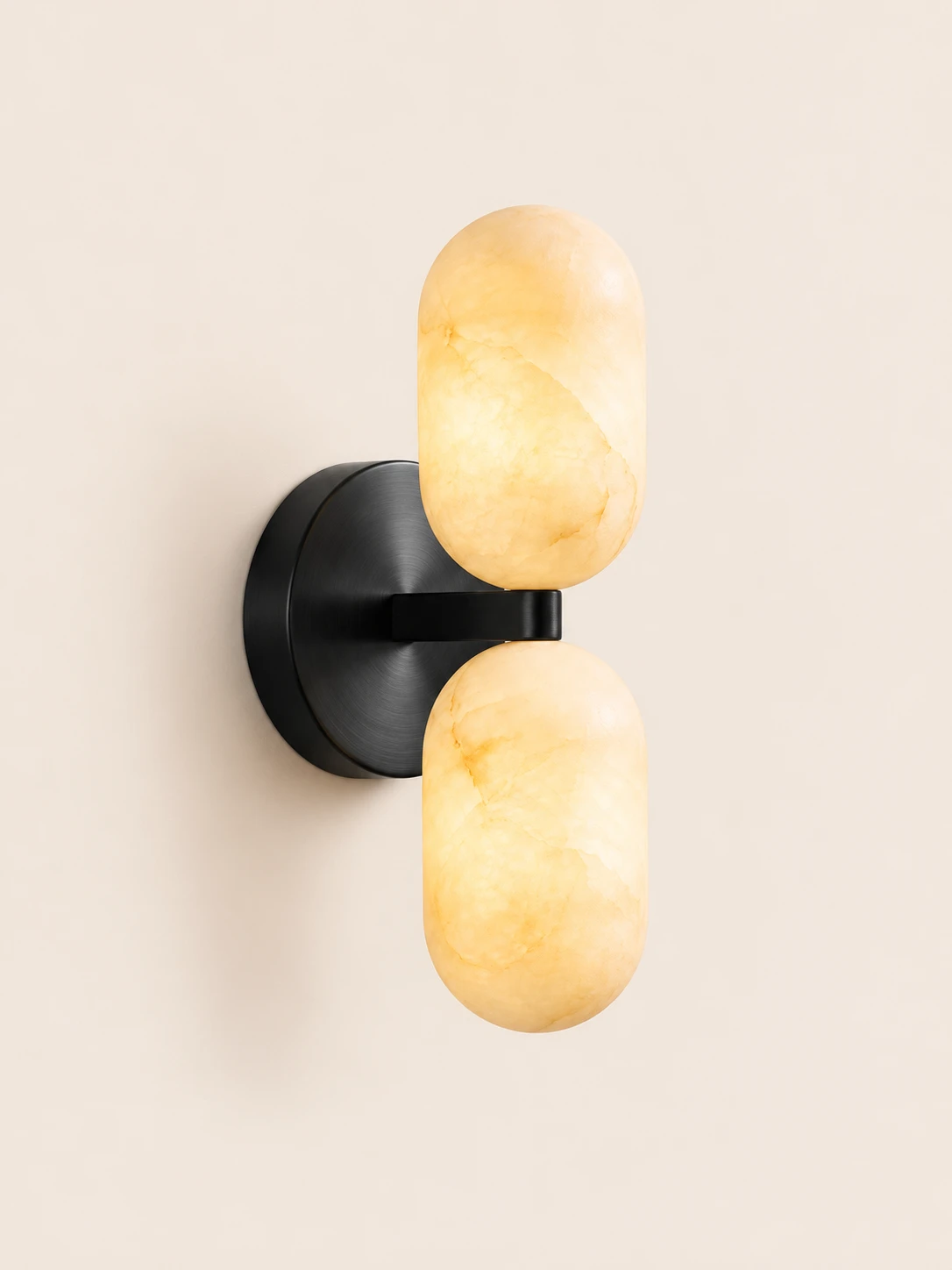
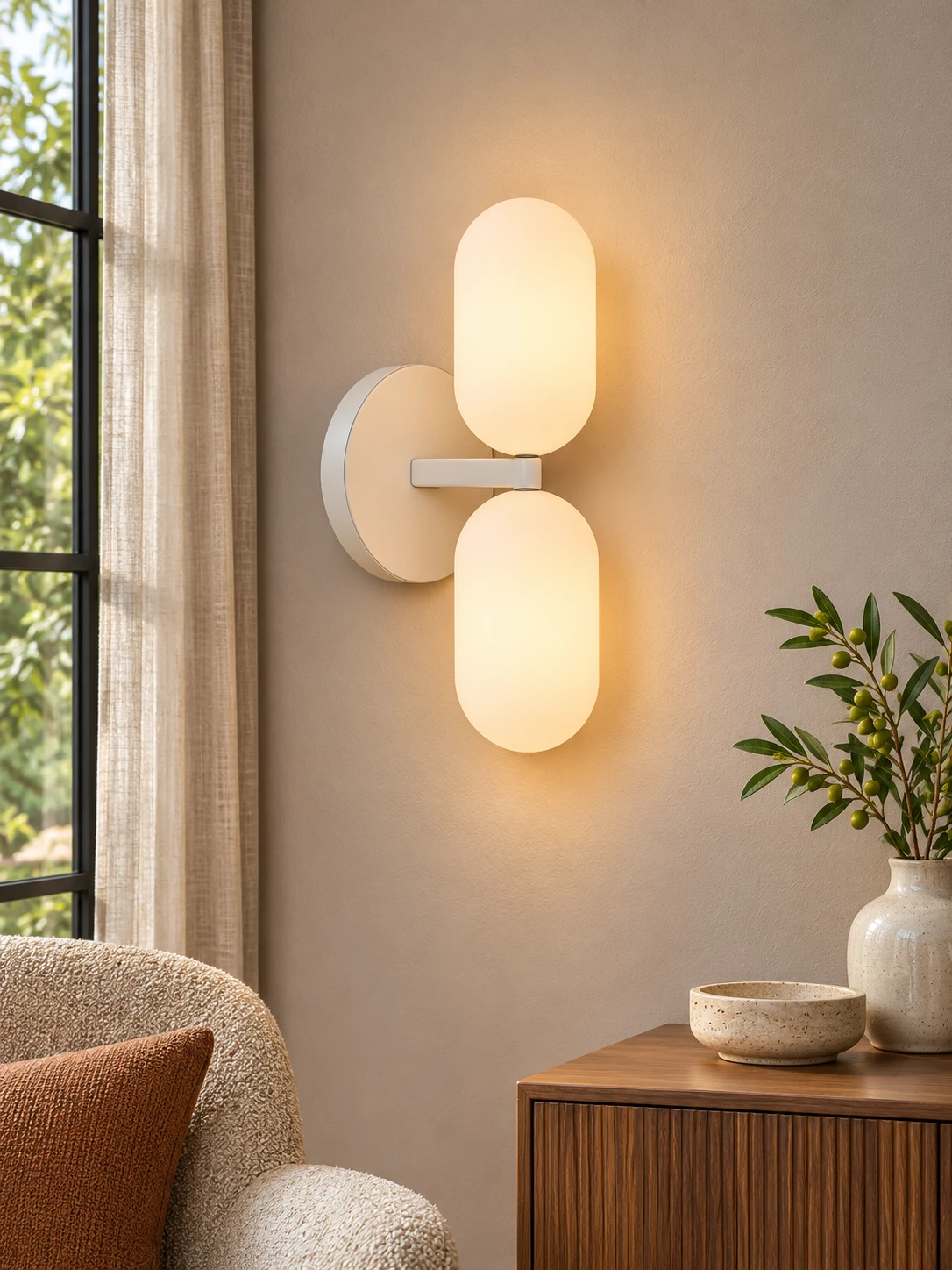
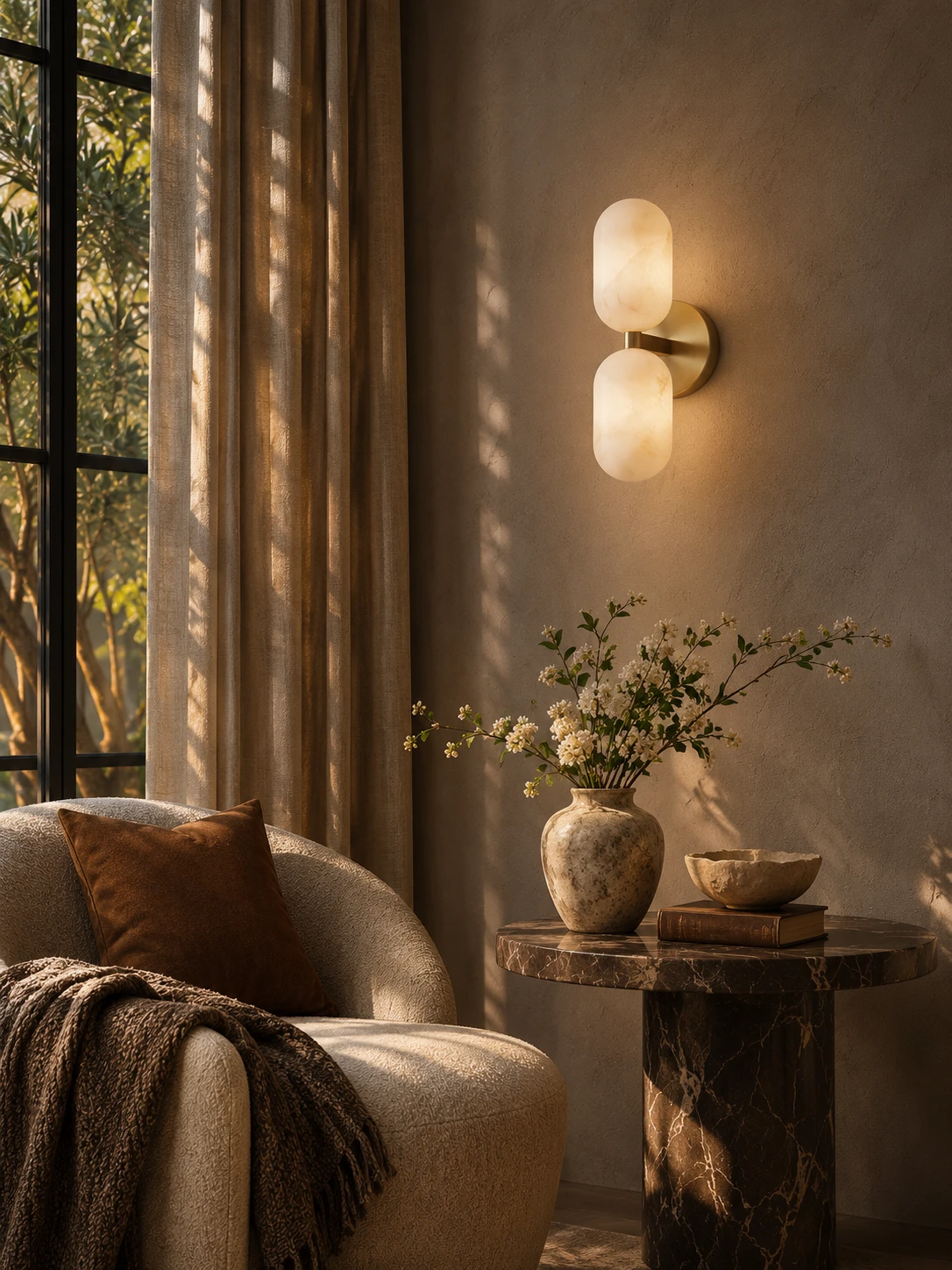
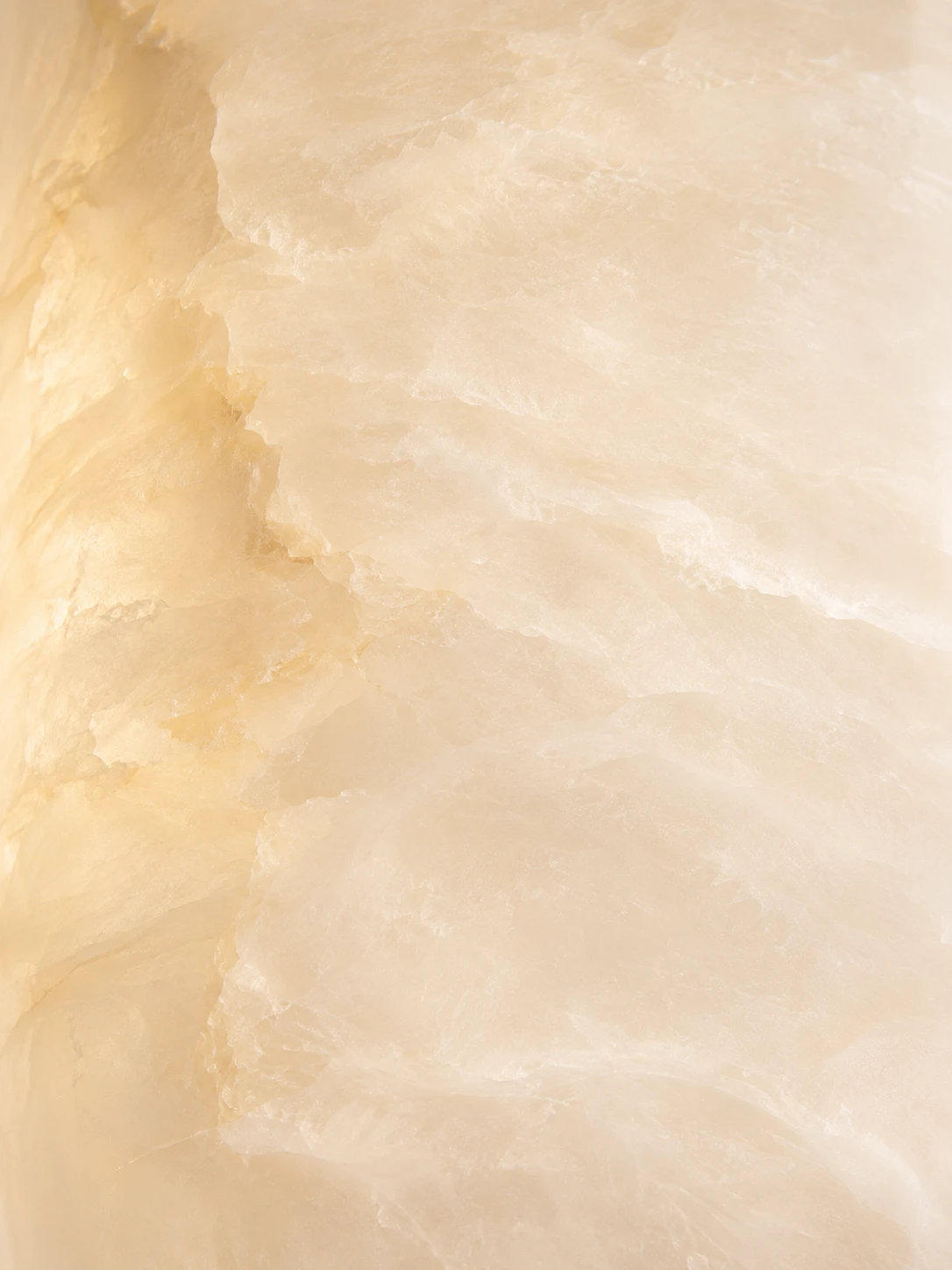
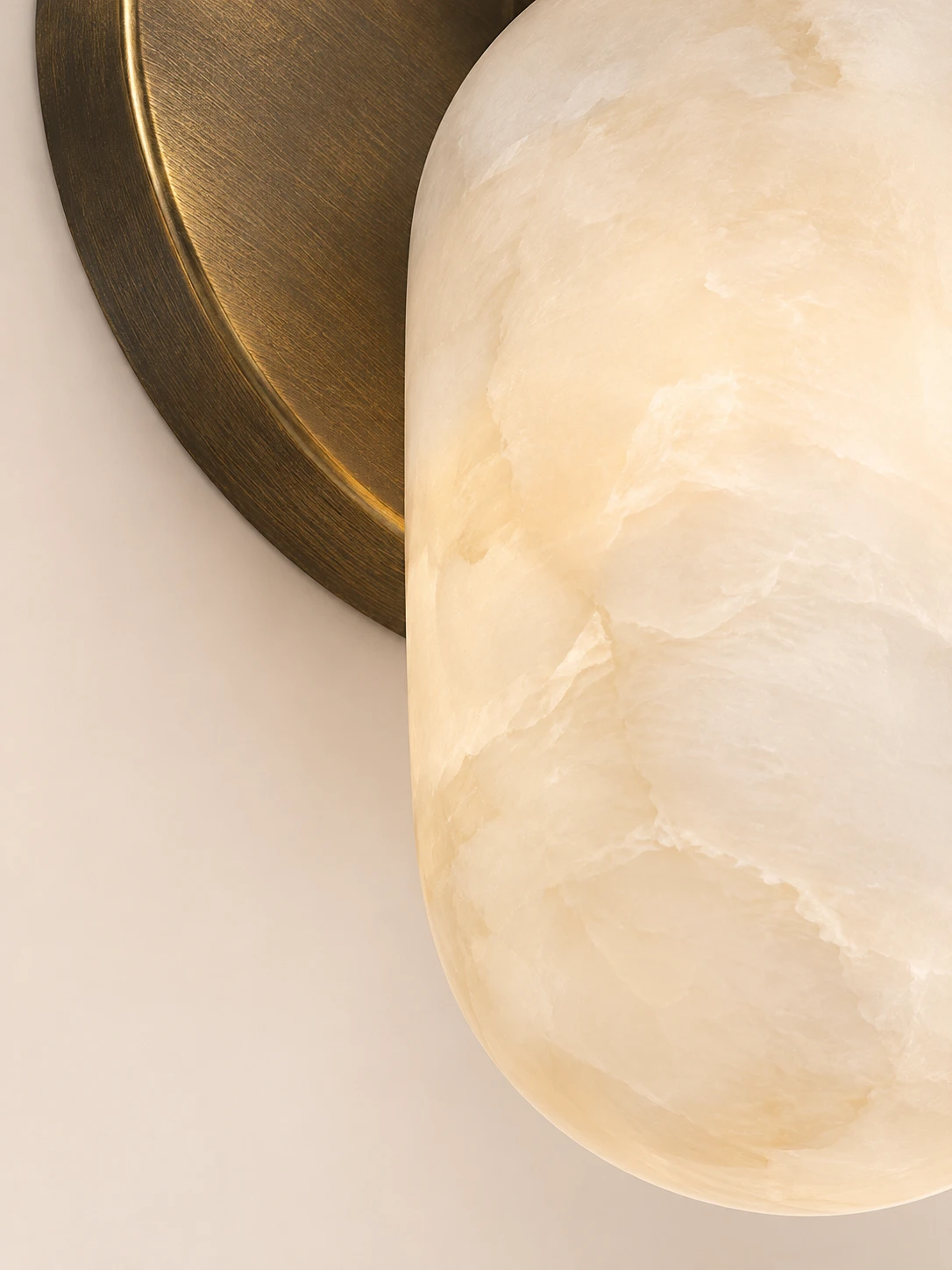
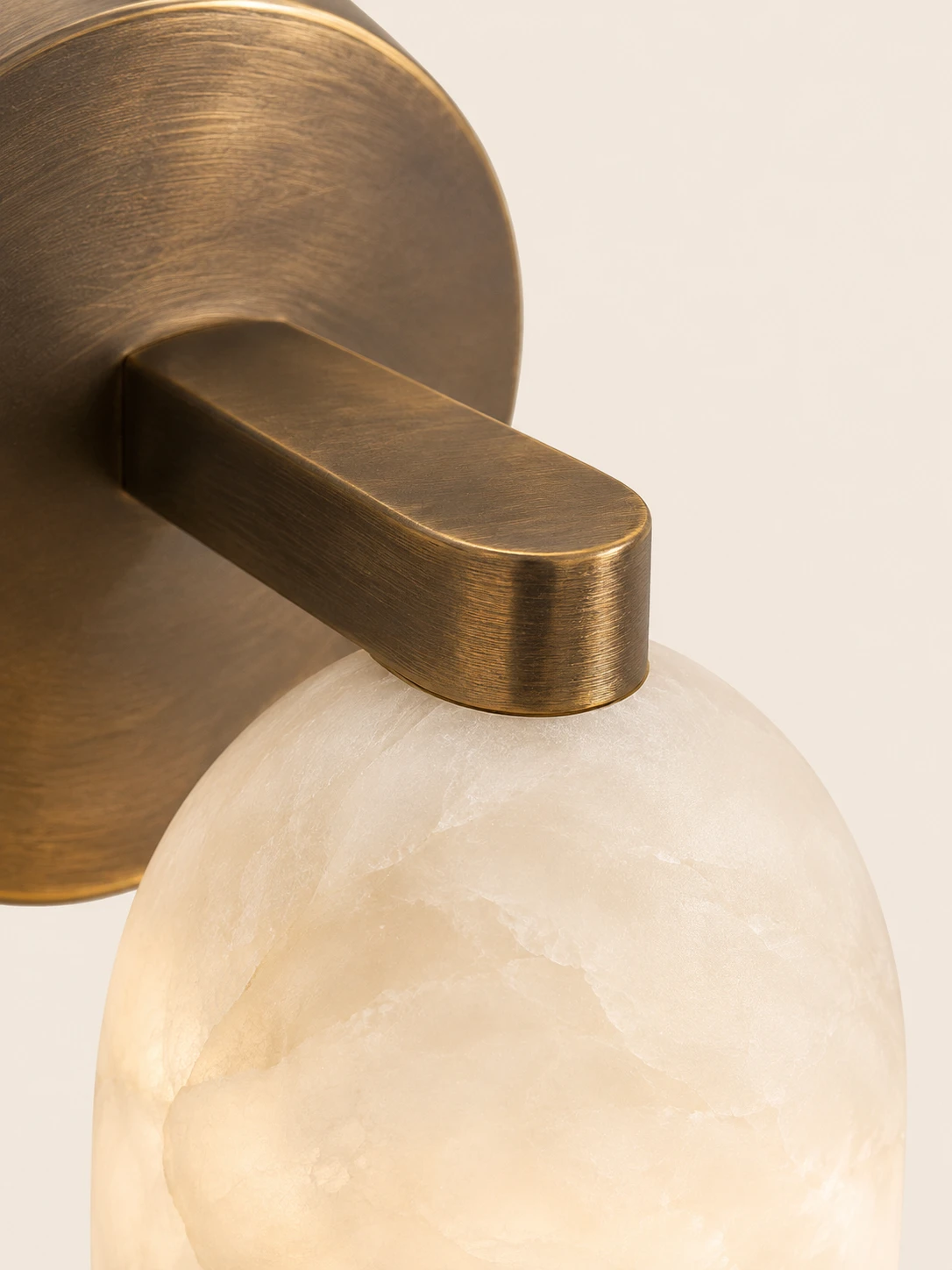
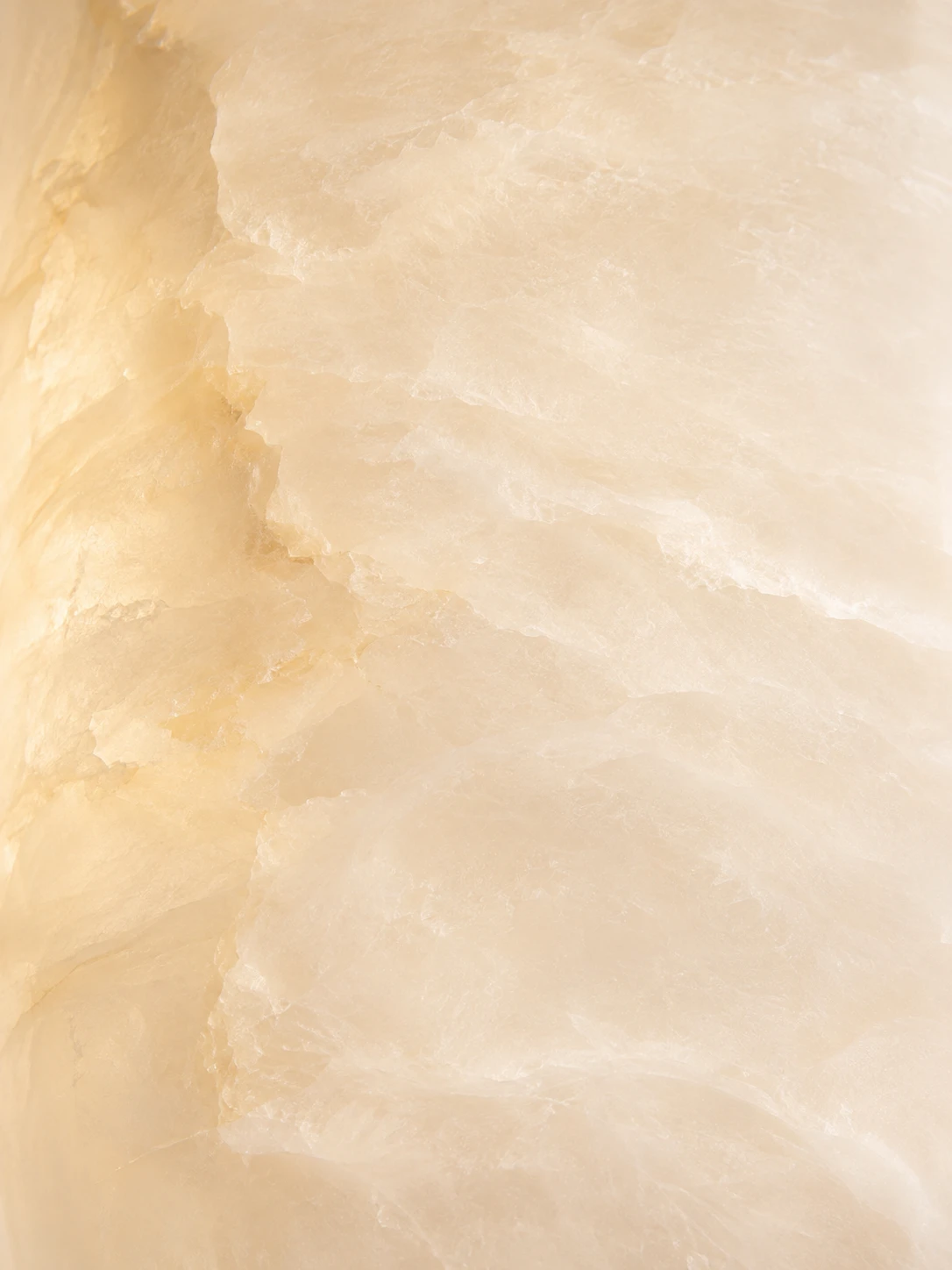
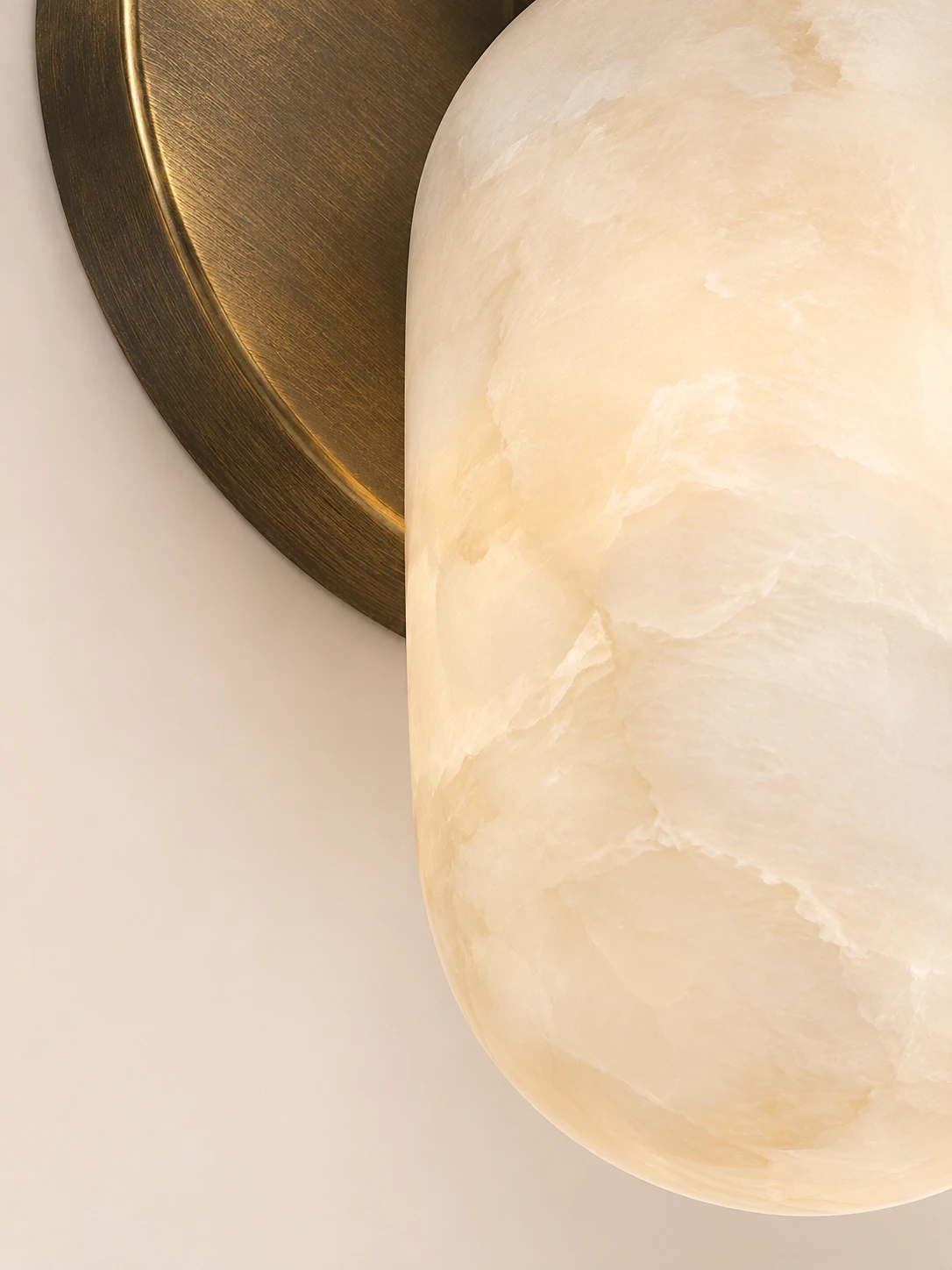
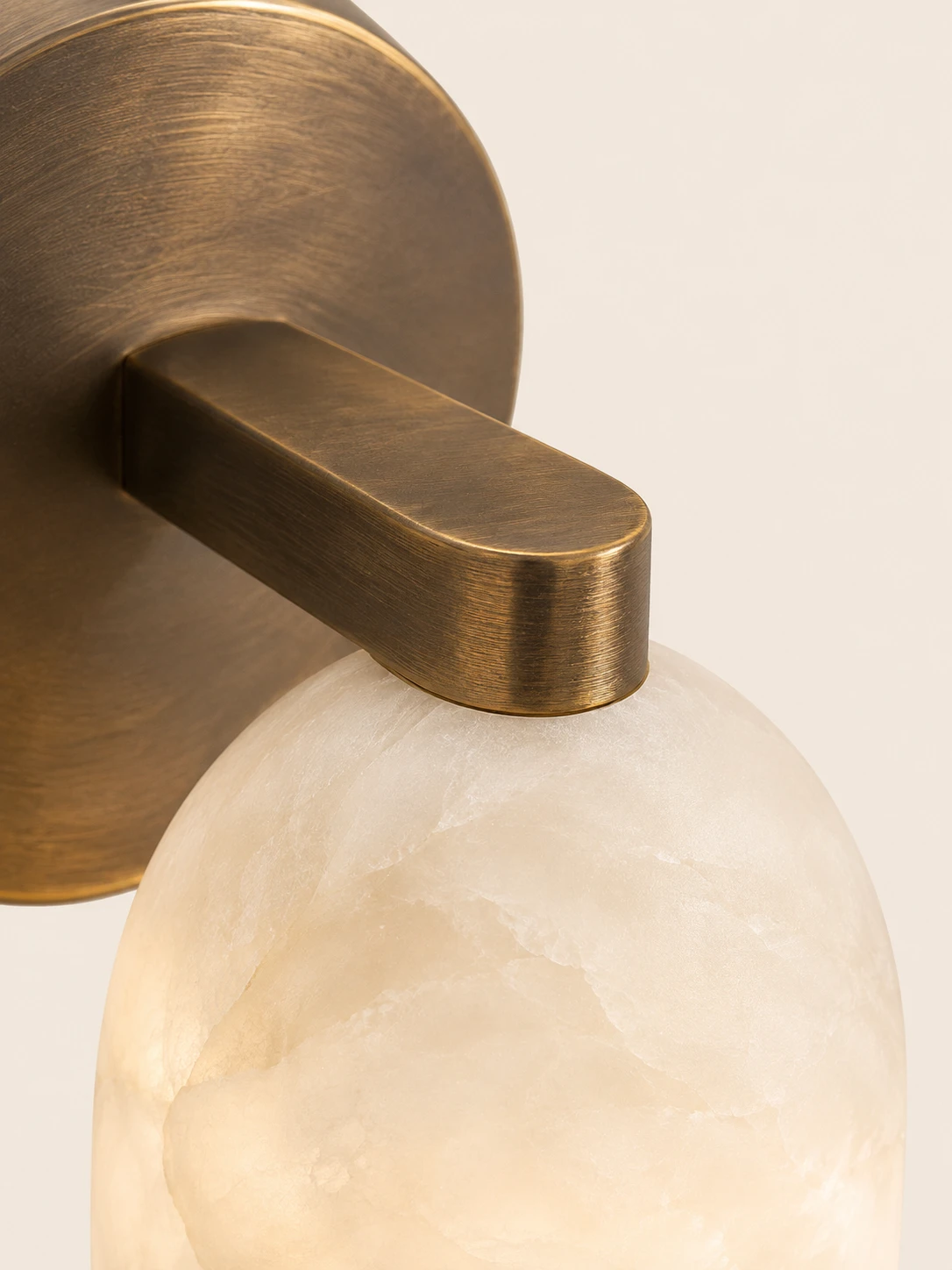
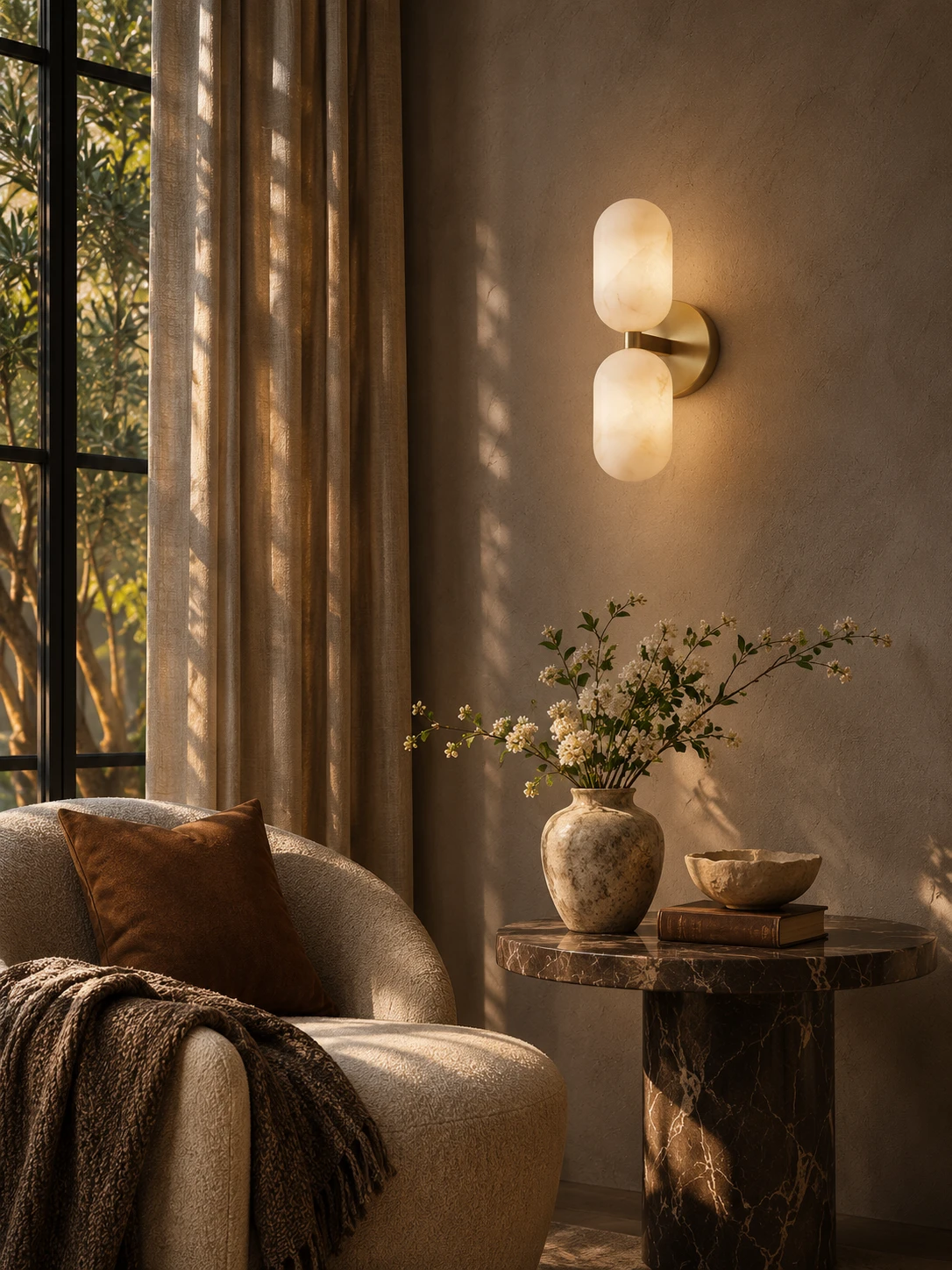
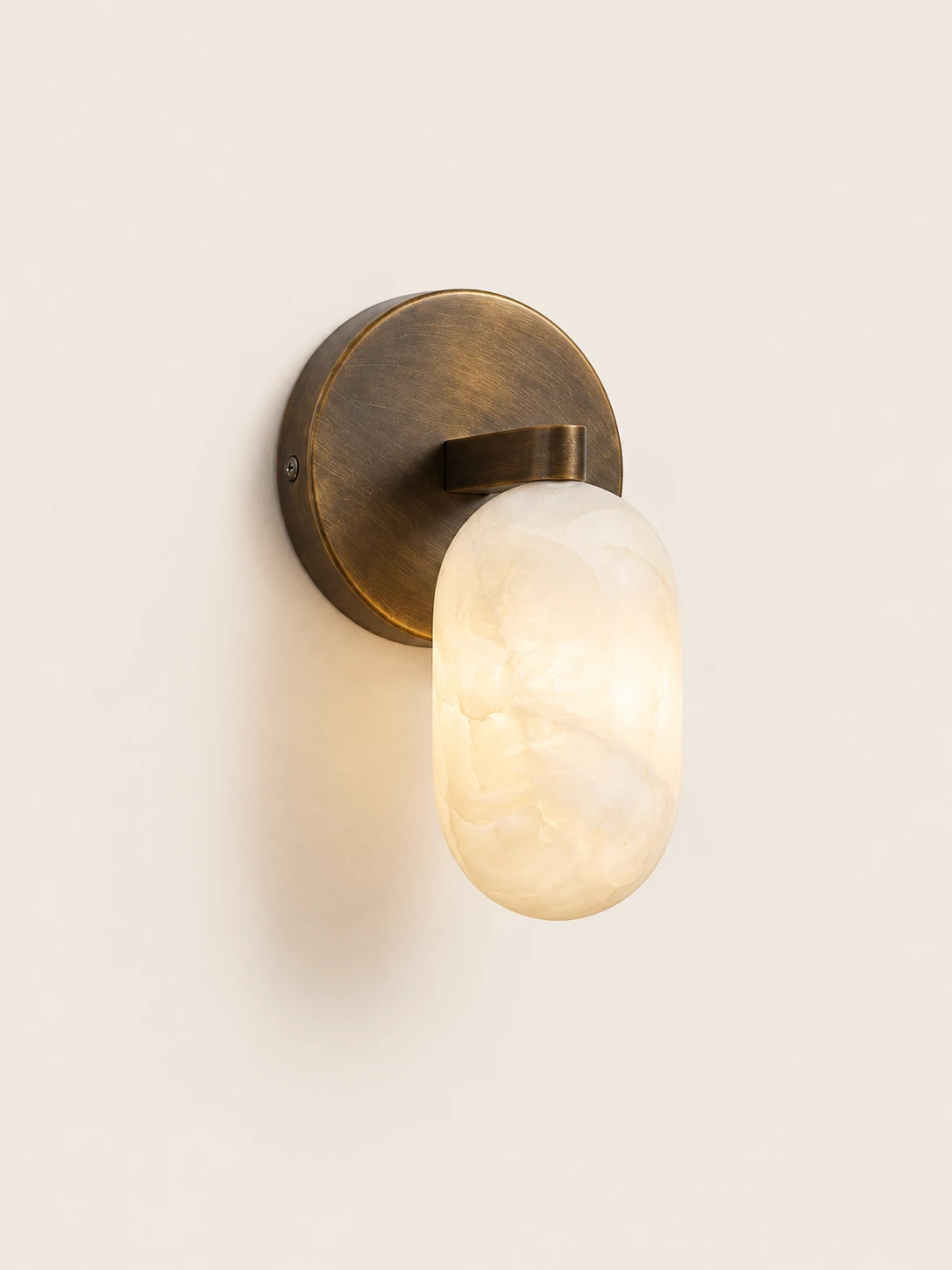
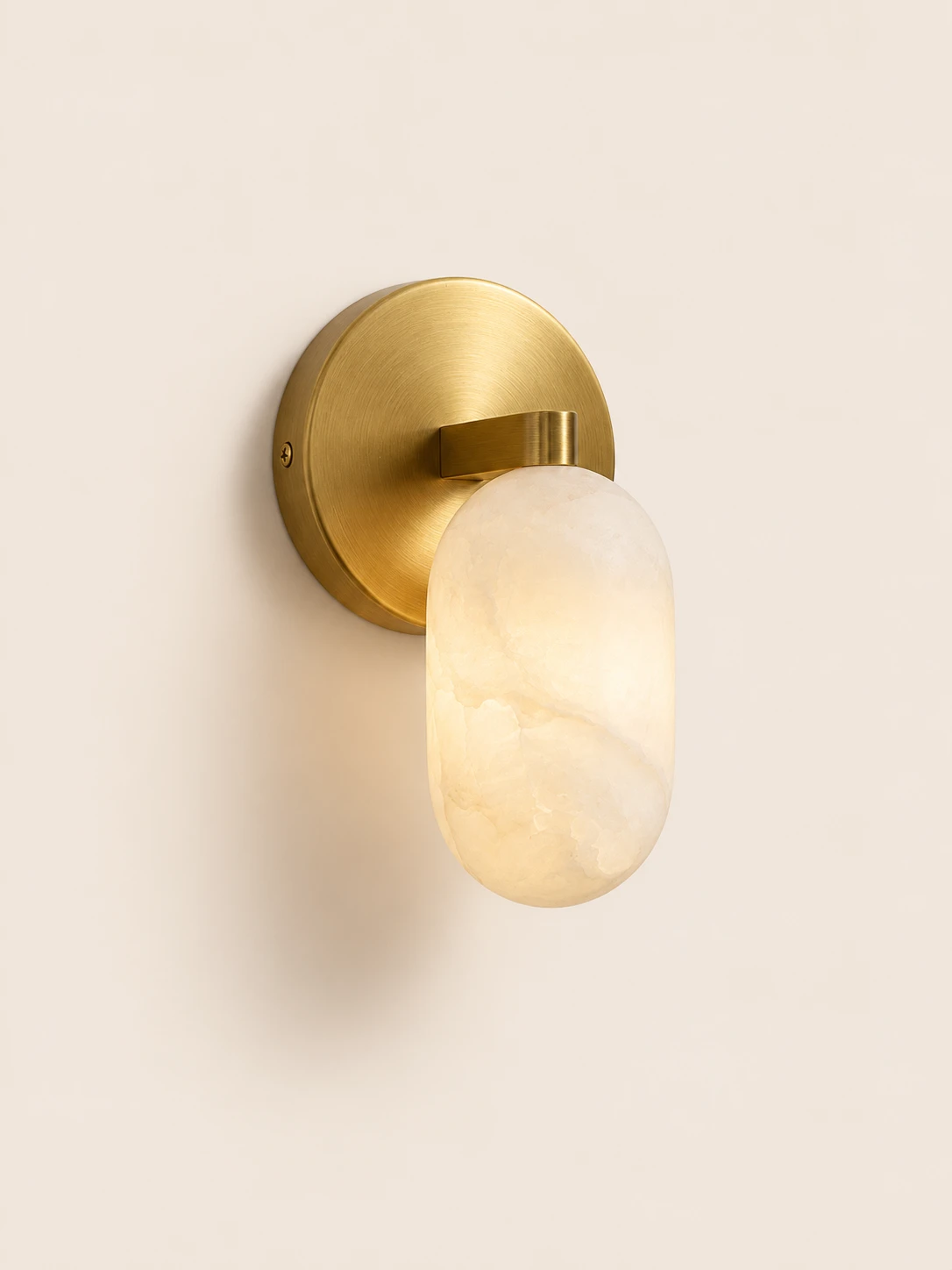
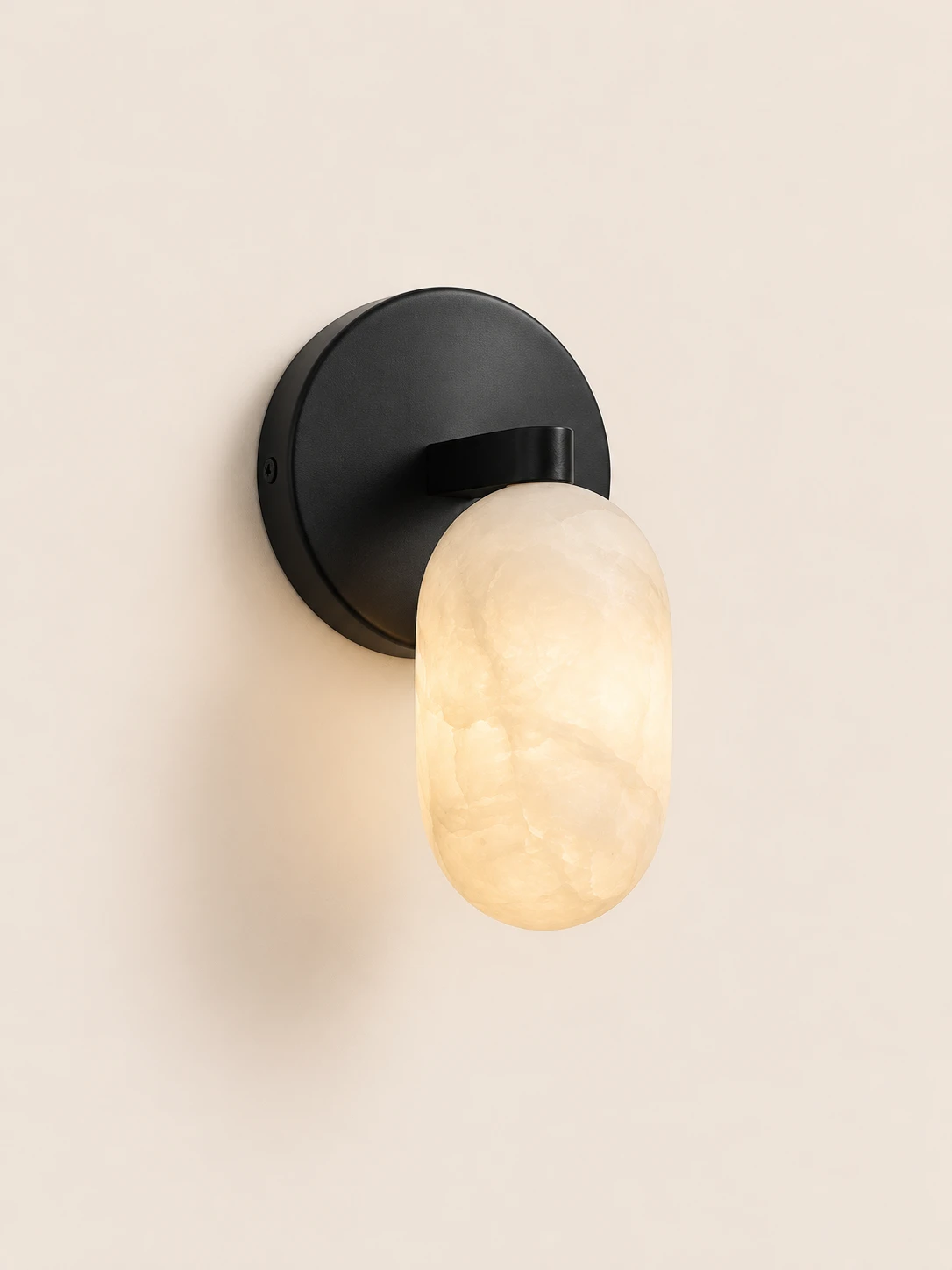
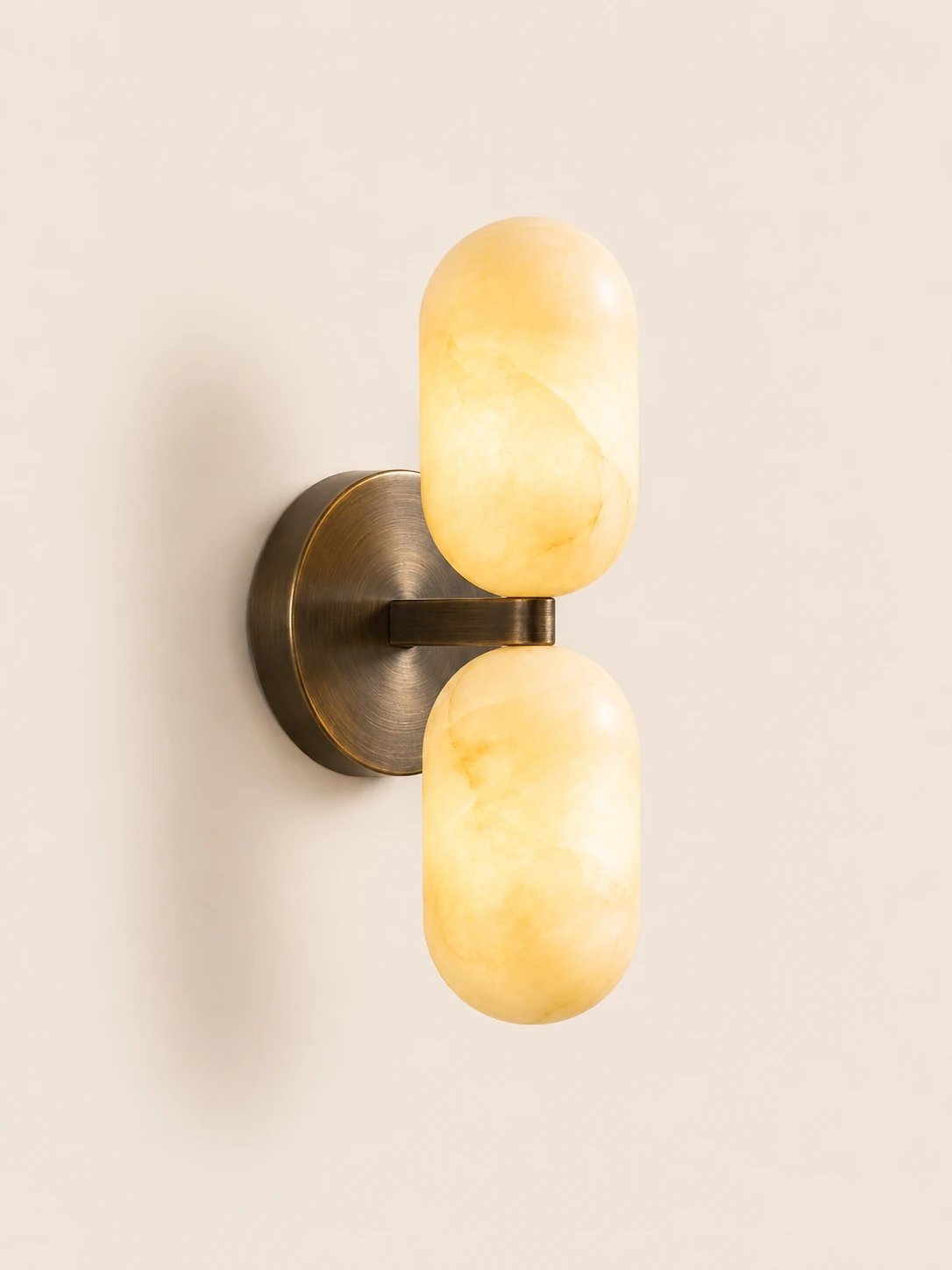
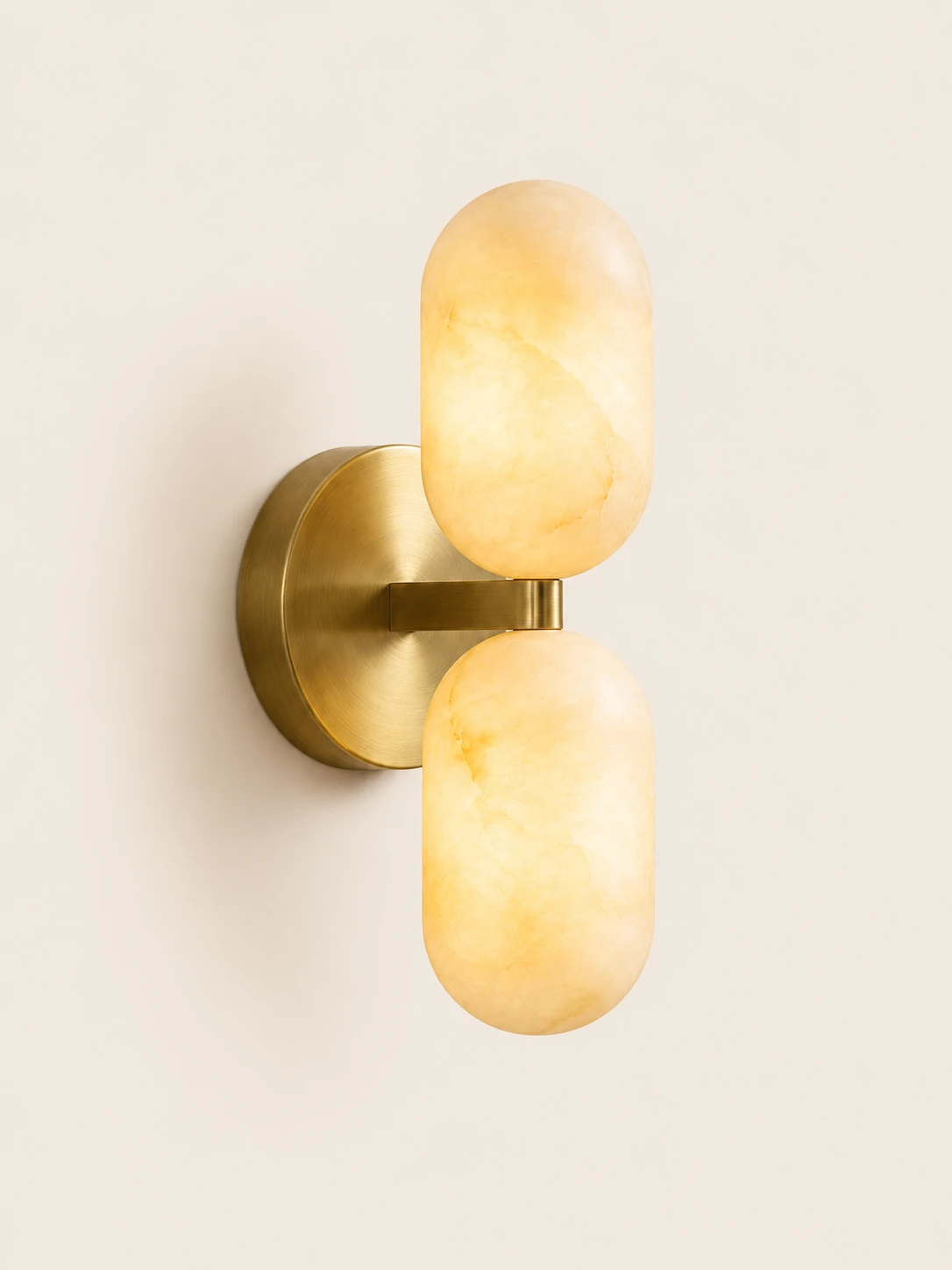
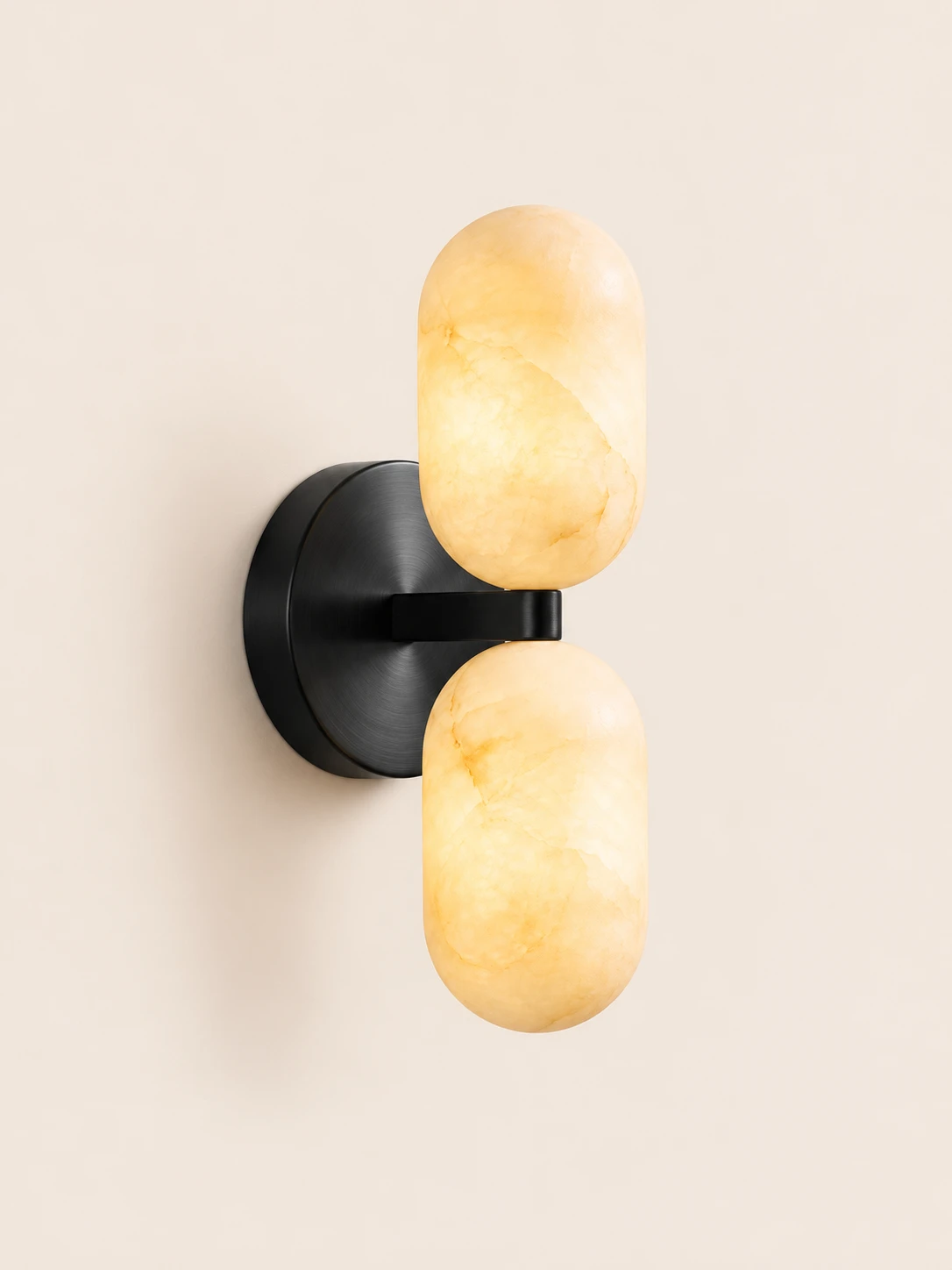
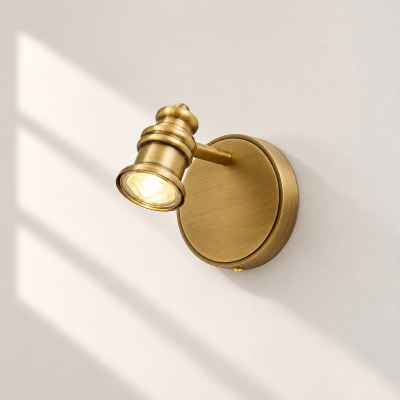
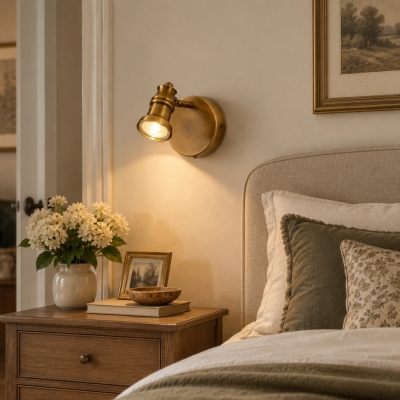
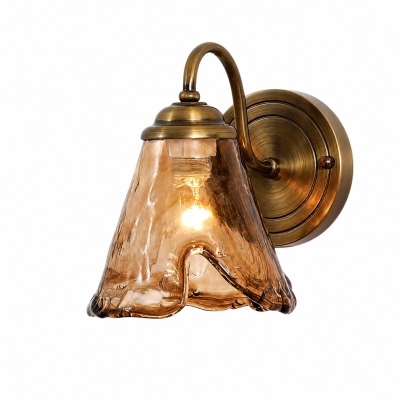
Three views show the alabaster’s cloudy veining and the points where the brass hardware meets the shade
01The alabaster is creamy and translucent, with soft cloudy veining and faint warm-gold streaks across the stone02A circular brushed-brass backplate curves beside the rounded shade, its warm metal edge set against the pale, glowing stone03A short brushed-brass arm extends from the backplate to the top of the shade, where the metal rests against the smooth, rounded alabaster
Alabaster Wall Sconce
Warm Brass and
Alabaster Light
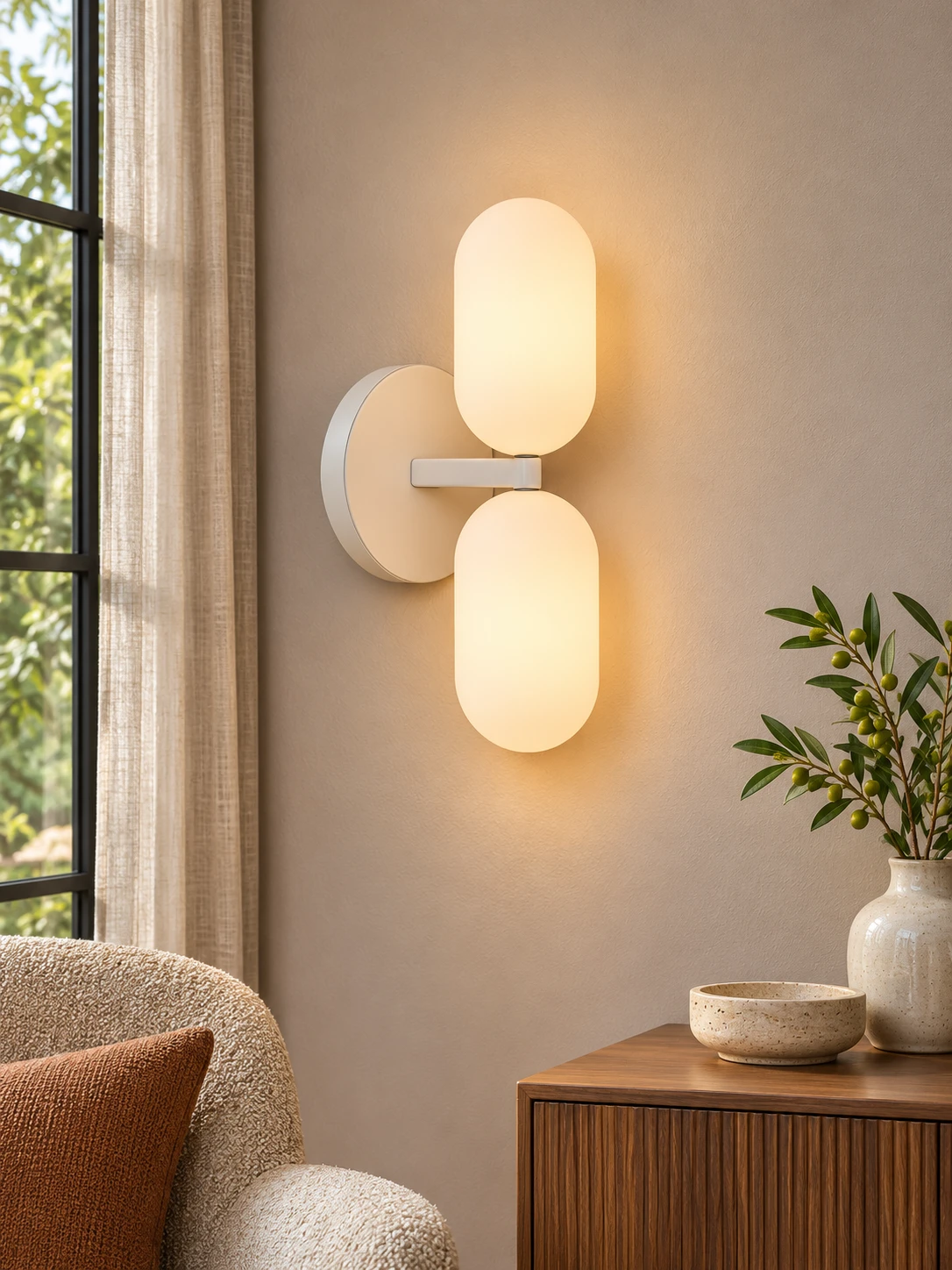
A warm brass backplate carries rounded natural alabaster shades, with subtle stone veining across a clean vertical profile. Light passes through the white stone as a soft, diffused glow suited to both narrow and open wall areas. Use one for focused ambient light, or a matching pair beside a mirror, bed, console, or artwork
Highlights
Stone, Brass, and Scale
Spanish alabaster shades, a brass body, and two head counts shape this hardwired wall light
01
Spanish Alabaster
The white shades are Spanish alabaster, and each piece shows its own natural veining
02
Three Body Finishes
The brass body comes in antique bronze, black, or brass, and works with wood, marble, plaster, and neutral walls
03
One or Two Heads
A single-head size and a taller two-head size share the same depth and width
04
Candelabra Light
The E26 or E27 candelabra socket is hardwired, the bulb is sold separately, and dimming needs a dimmable bulb plus a compatible dimmer
Specifications
Size and light
1 head
D 8cm x W 13cm x H 21cm / ∅ 3.1″ x W 5.1″ x H 8.3″
2 heads
D 8cm x W 13cm x H 31cm / ∅ 3.1″ x W 5.1″ x H 12.2″
Socket
E26 or E27 candelabra base
Bulb
Not included — sold separately
Dimmable
Yes — requires a dimmable bulb and compatible dimmer switch
Wiring
Hardwired
Installation
Hardwired wall installation; fits a standard single-gang wall box; mounting hardware included
Antique Bronze1 head ∅ 3.1″ x W 5.1″ x H 8.3″
Brass1 head ∅ 3.1″ x W 5.1″ x H 8.3″
Black1 head ∅ 3.1″ x W 5.1″ x H 8.3″
Antique Bronze2 heads ∅ 3.1″ x W 5.1″ x H 12.2″
Brass2 heads ∅ 3.1″ x W 5.1″ x H 12.2″
Black2 heads ∅ 3.1″ x W 5.1″ x H 12.2″
HOZO Installationsanleitung
Planen Sie Ihre Beleuchtung.
Raumweise Startwerte für Leuchtengröße, Montagehöhe, Abstand und Durchgangshöhe. Tippen Sie ein Kapitel an.
01
Esstisch
Größe und Mitte vom Tisch aus festlegen, dann die Sicht von jedem Sitz prüfen.
So messen
Tischlänge und -breite messen. Bei runden Tischen den Durchmesser nehmen.
Startbereich
Runde Leuchten: etwa 1/2 bis 2/3 der Tischbreite. Längliche Leuchten: 1/2 bis 2/3 der Tischlänge.
Platzierung
Die Leuchte über dem Tisch zentrieren, nicht zwingend über dem Raum.
Abstand
76–91 cm über der Tischplatte beginnen.
Bei langen Tischen wirken zwei kleinere Pendel oft natürlicher als eine übergroße Leuchte.
Vor dem Bohren
Eine Papierschablone an die Decke kleben und vom Türrahmen sowie sitzend prüfen.
MessenPlatte bis Unterkante
Hängehöhe76–91 cm
AusrichtenMitte des Tisches
02
Kücheninsel
Die nutzbare Insel messen und die Pendel auf der Mittellinie halten.
So messen
Nutzbare Länge und Breite der Insel messen.
Startbereich
Eine Linienleuchte: 1/2 bis 2/3 der Insel-Länge. Mehrere Pendel: erst den Durchmesser, dann die Anzahl wählen.
Platzierung
Pendelmitten gleichmäßig auf der Insel-Mittellinie.
Abstand
76–91 cm über der Arbeitsplatte. Äußere Pendel nicht an den Inselenden.
Die komplette Reihe mocken, nicht nur ein Pendel.
Vor dem Bohren
Drei Papierkreise über der Insel zeigen Abstandsprobleme schneller als ein einzelnes Muster.
MessenPlatte bis Unterkante
Hängehöhe76–91 cm
AusrichtenGleiche Mitten
03
Raummitte
Länge plus Breite ergibt den Startdurchmesser. Deckenhöhe und visuelle Schwere machen die Entscheidung fertig.
So messen
Raumlänge und -breite in Metern plus fertige Deckenhöhe.
Startbereich
Länge + Breite (m) × 8,3 ergibt einen üblichen Startdurchmesser in cm. Beispiel: 3,7 + 3,0 → ca. 56 cm.
Platzierung
Die architektonische Mitte nur nutzen, wenn sie vom Eingang und vom Möbelplan her Sinn ergibt.
Abstand
Mindestens 2,10 m lichte Höhe unter dem tiefsten Punkt im Laufbereich.