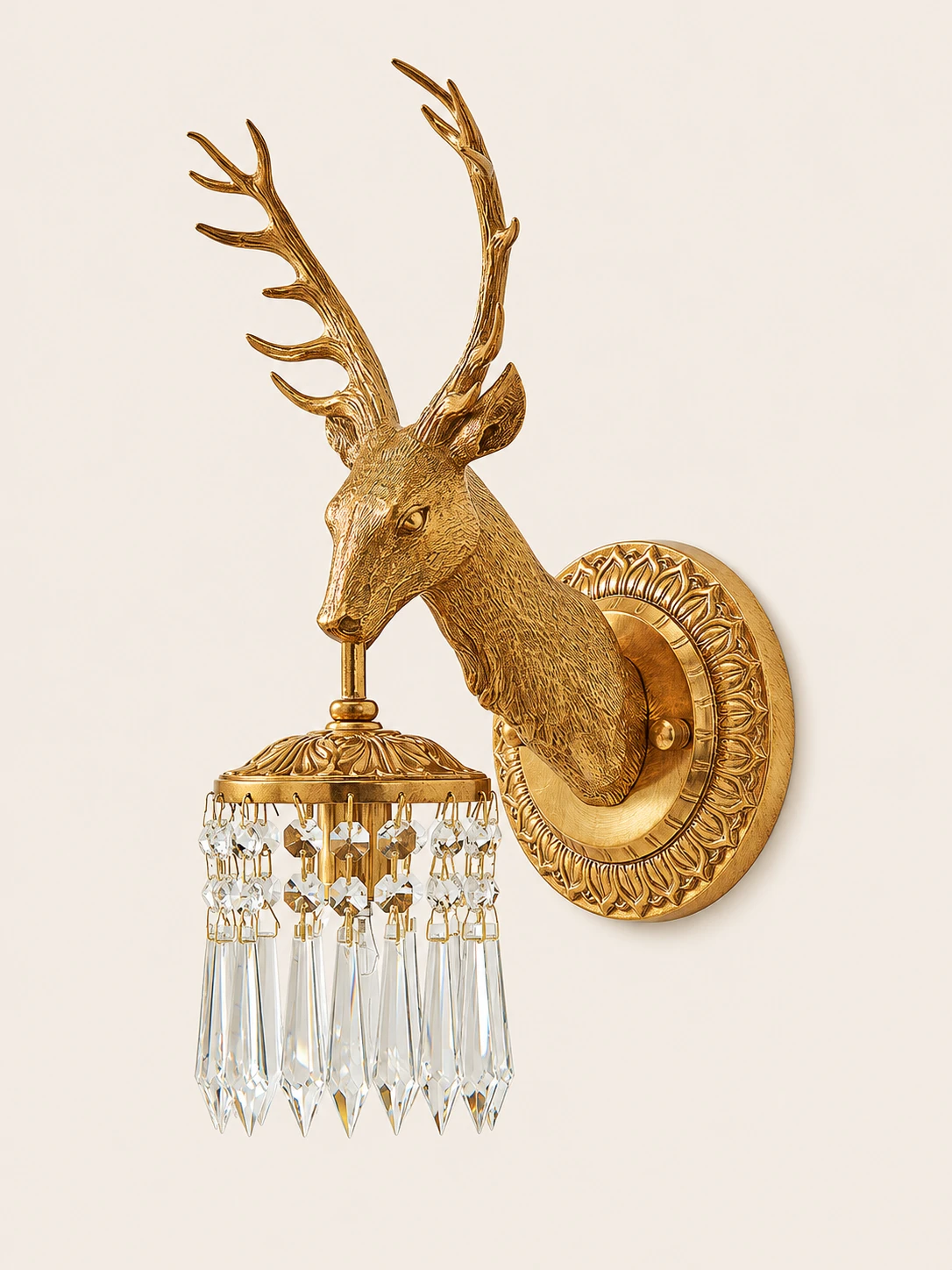
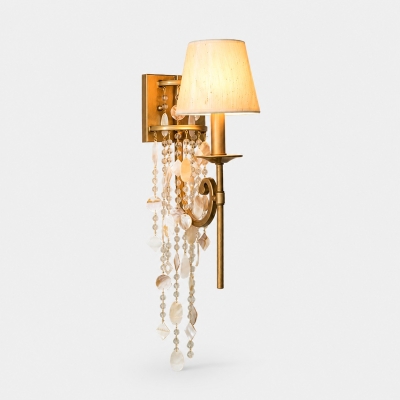
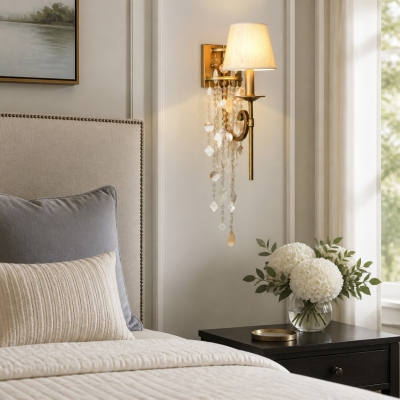
Sculptural Stag Head Crystal Wall Sconce – Classic Traditional Style – Hall and Living Room
Preț obișnuit€274.00
Preț de vânzare€274.00Preț obișnuit€600.00
/
Vorbește despre brandul tău
Asociați textul cu o imagine pentru a vă concentra asupra produsului, colecției sau articolului de blog ales. Adăugați detalii despre disponibilitate, stil sau chiar oferiți o recenzie.
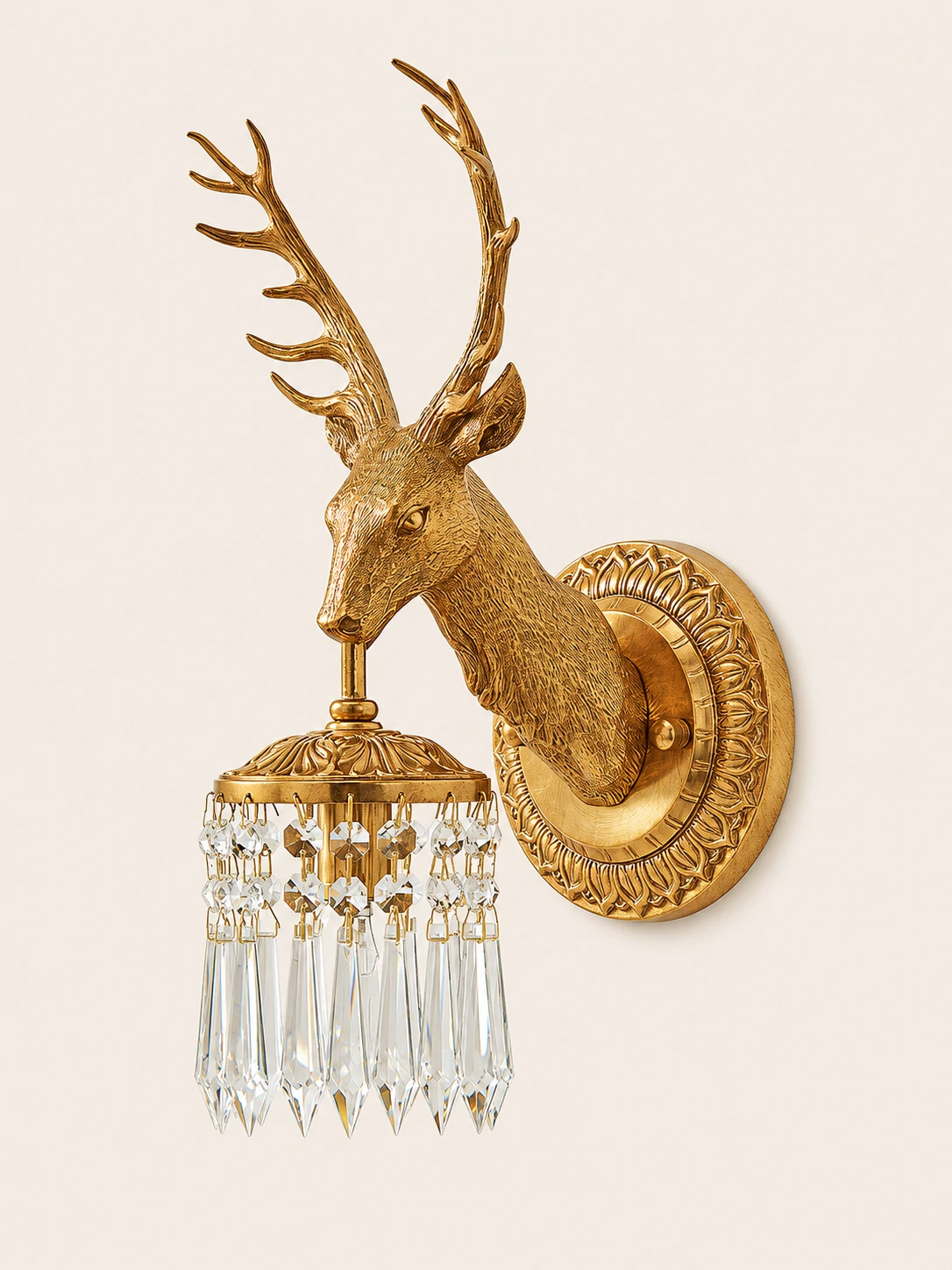
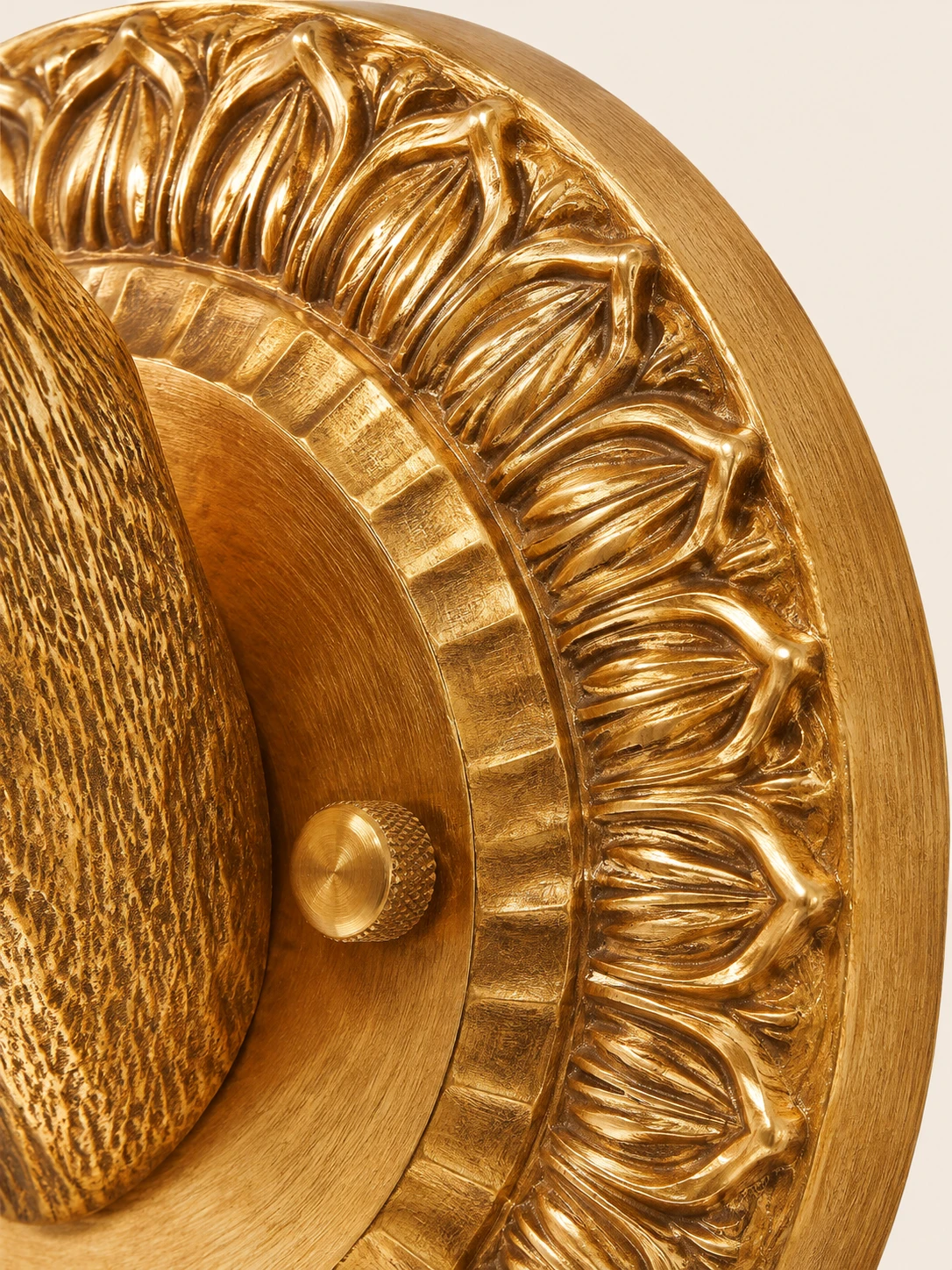
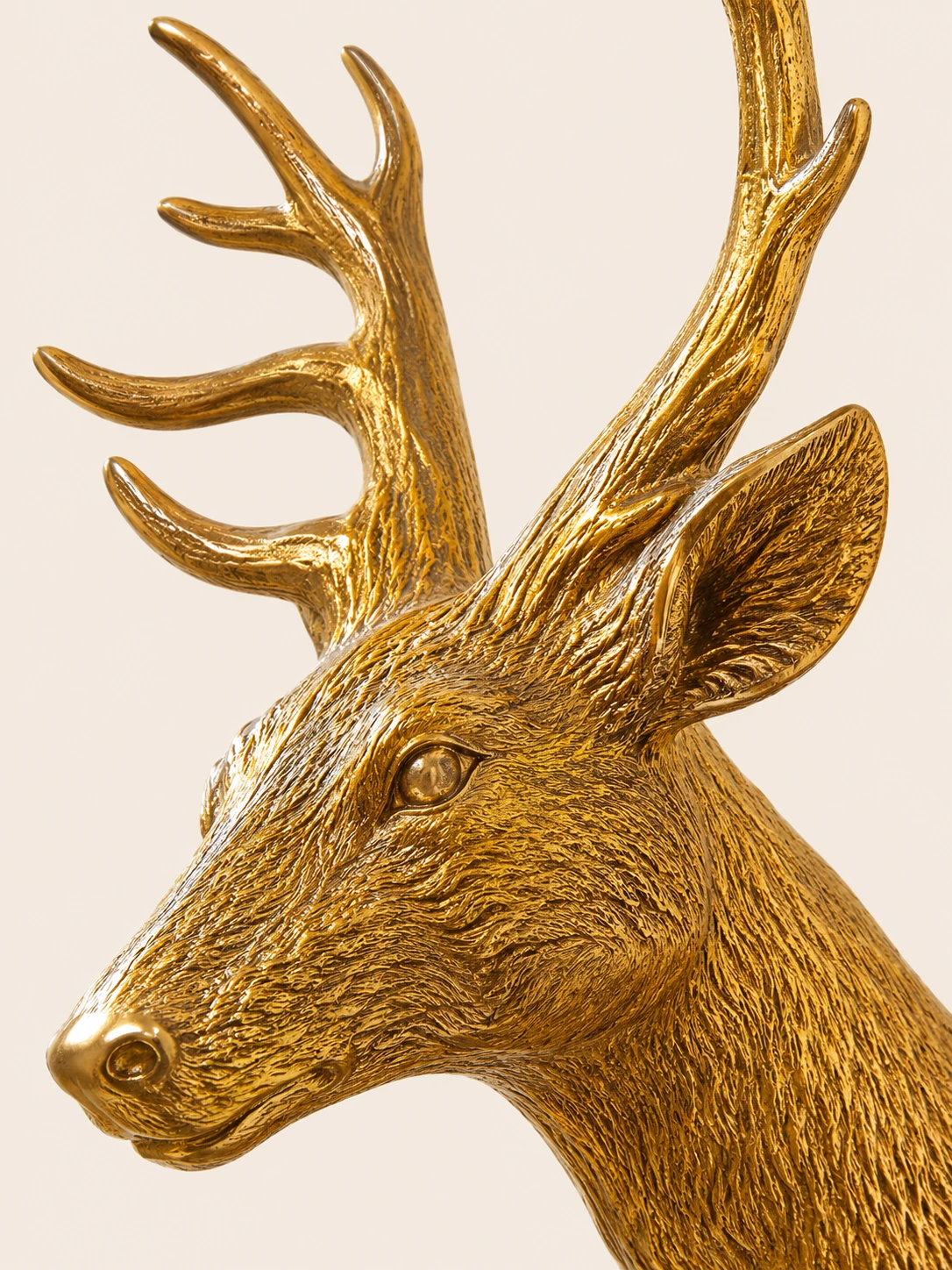
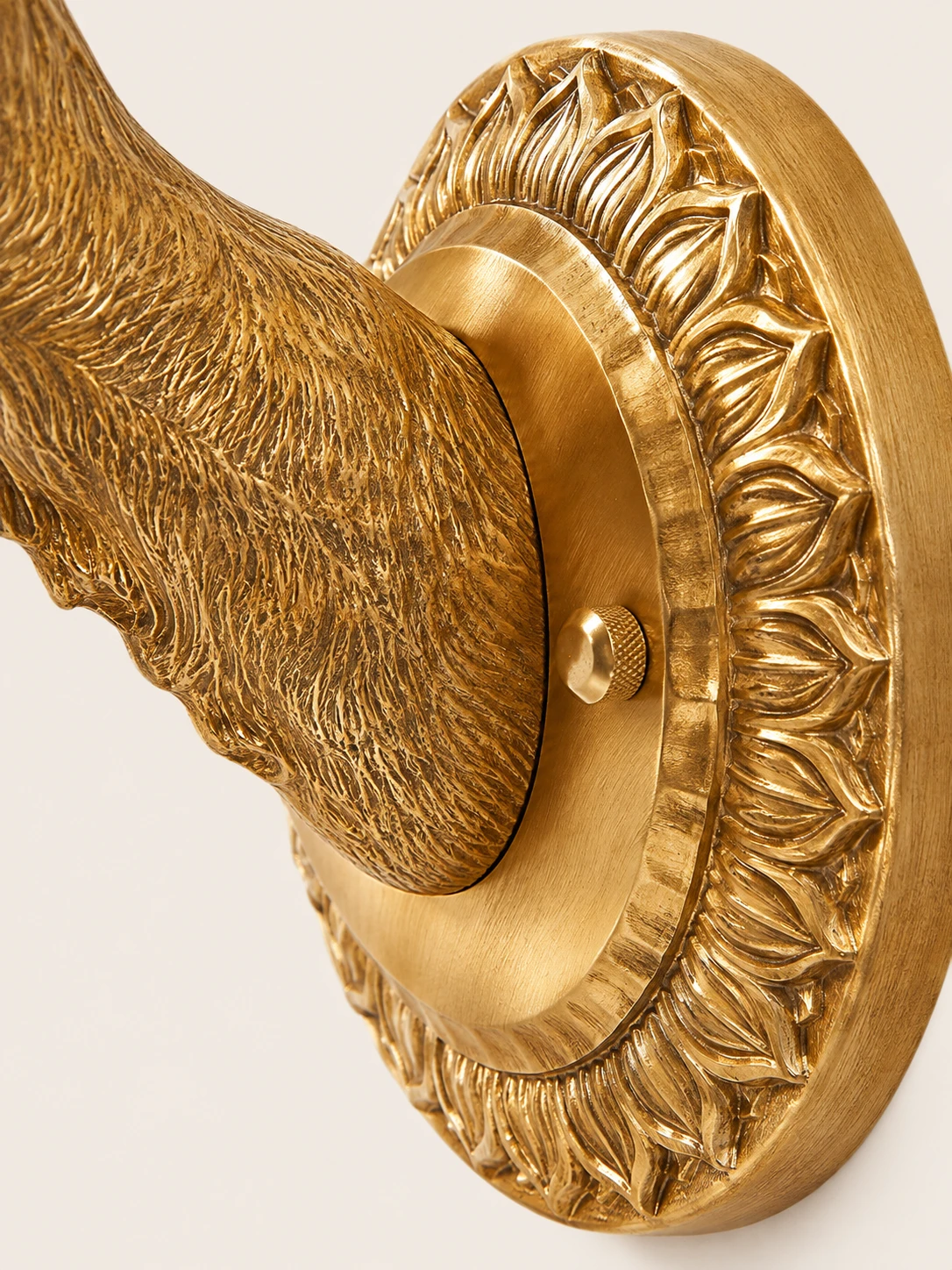
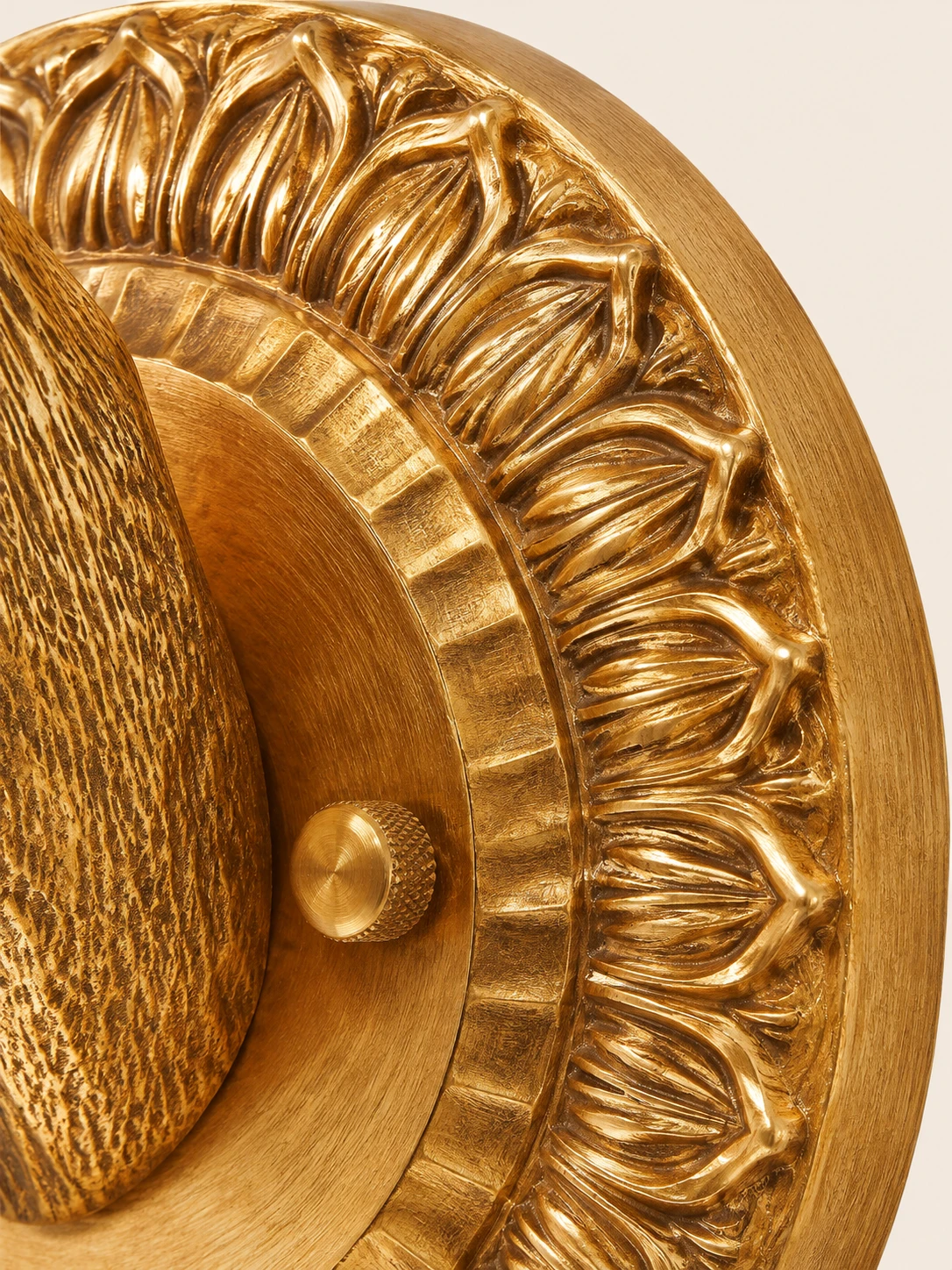
Close views show the sculpted stag, its textured surface, and the fluted wall plate that supports it
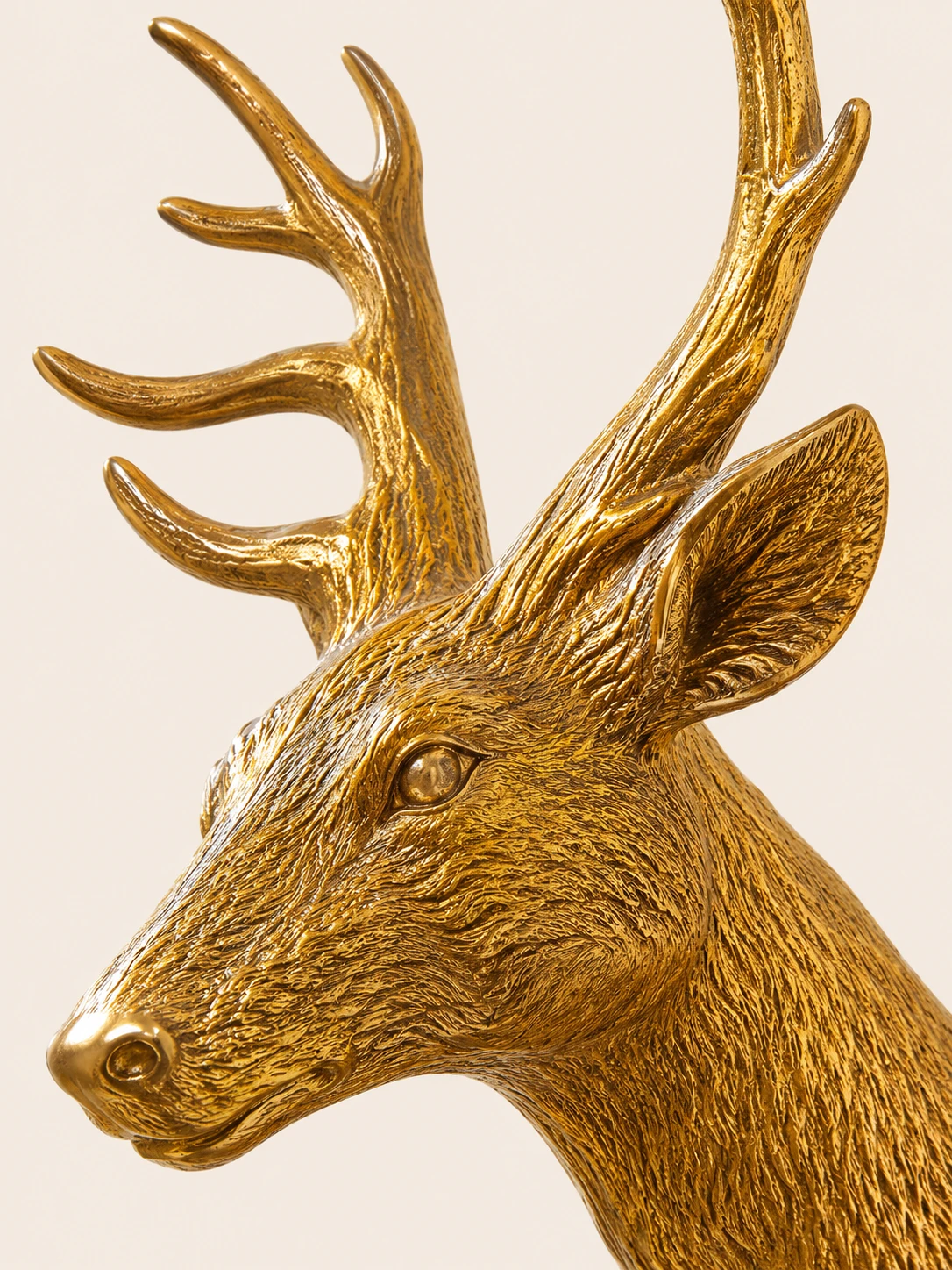
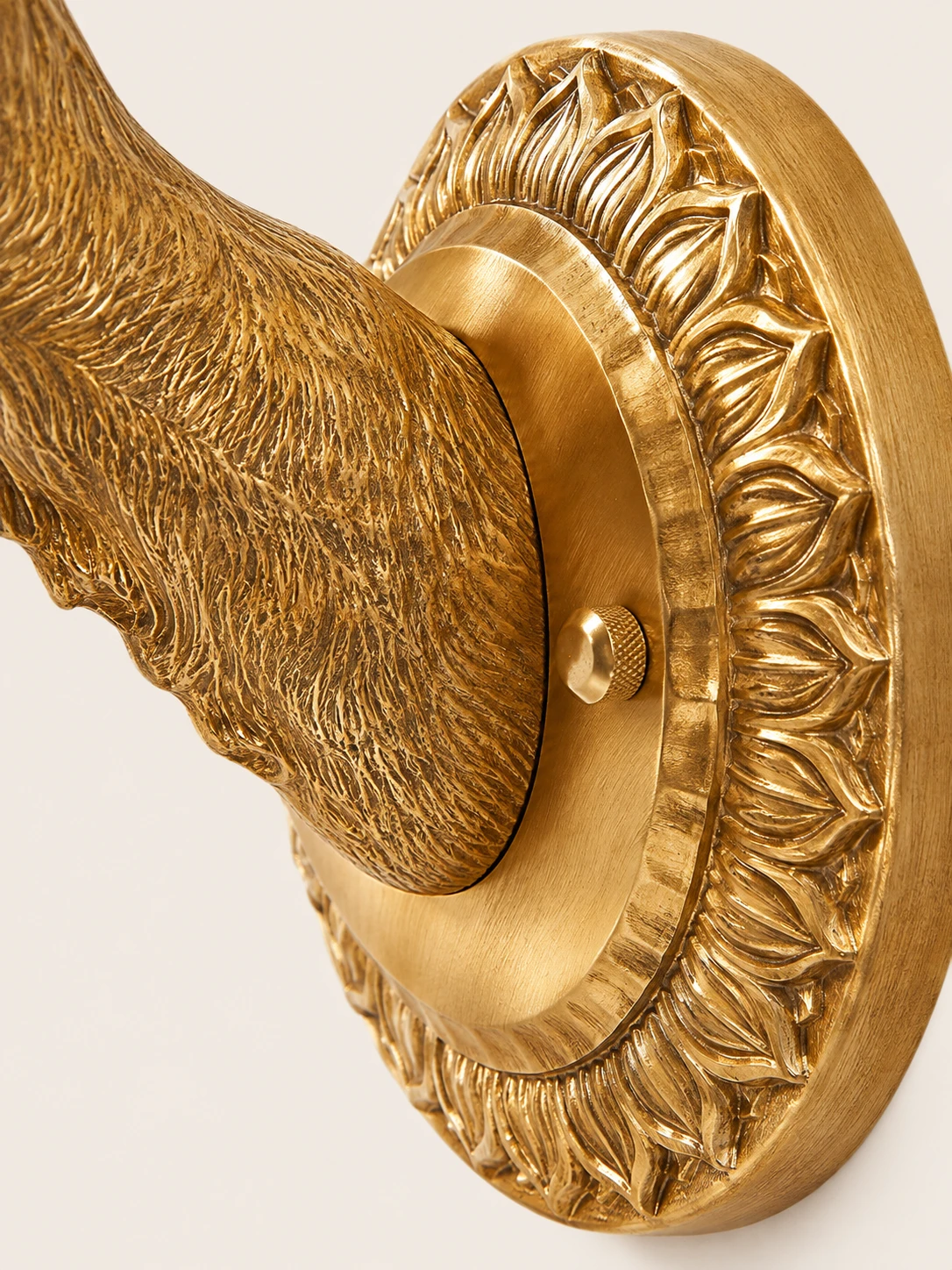
01A round gold plate is edged with overlapping pointed leaves and a reeded inner ring, with a small knurled knob on the smooth center and a coarse textured casting along the left02The stag appears in profile, with branching antlers, a shaped ear and eye, and fine cast texture across the muzzle, cheek, and neck03The fur-textured neck meets the circular medallion, where a small knurled fitting sits on the inner disc inside the leaf border and fluted ring
Sculptural wall sconce
Antlered stag sconce
with crystal drops
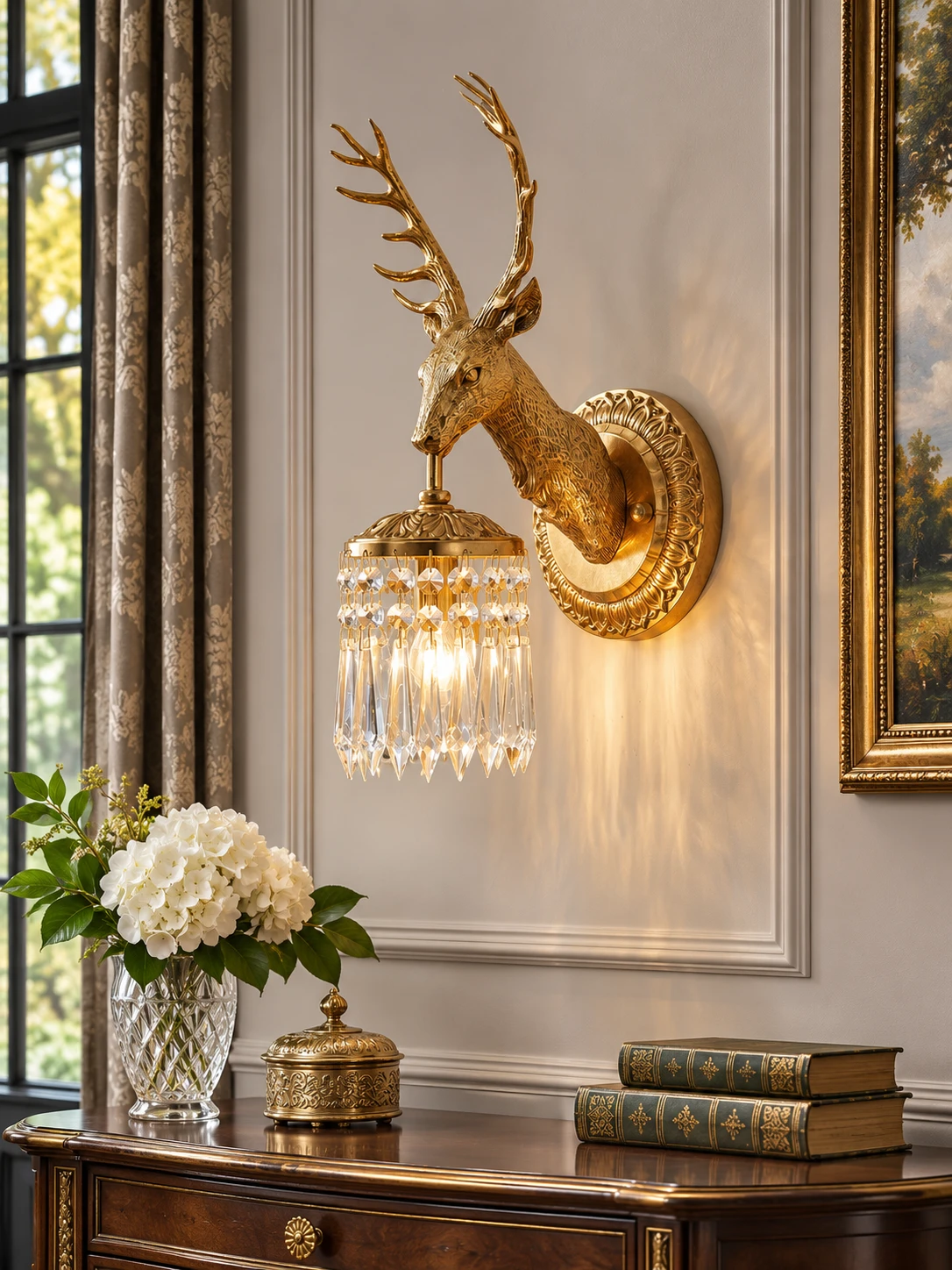
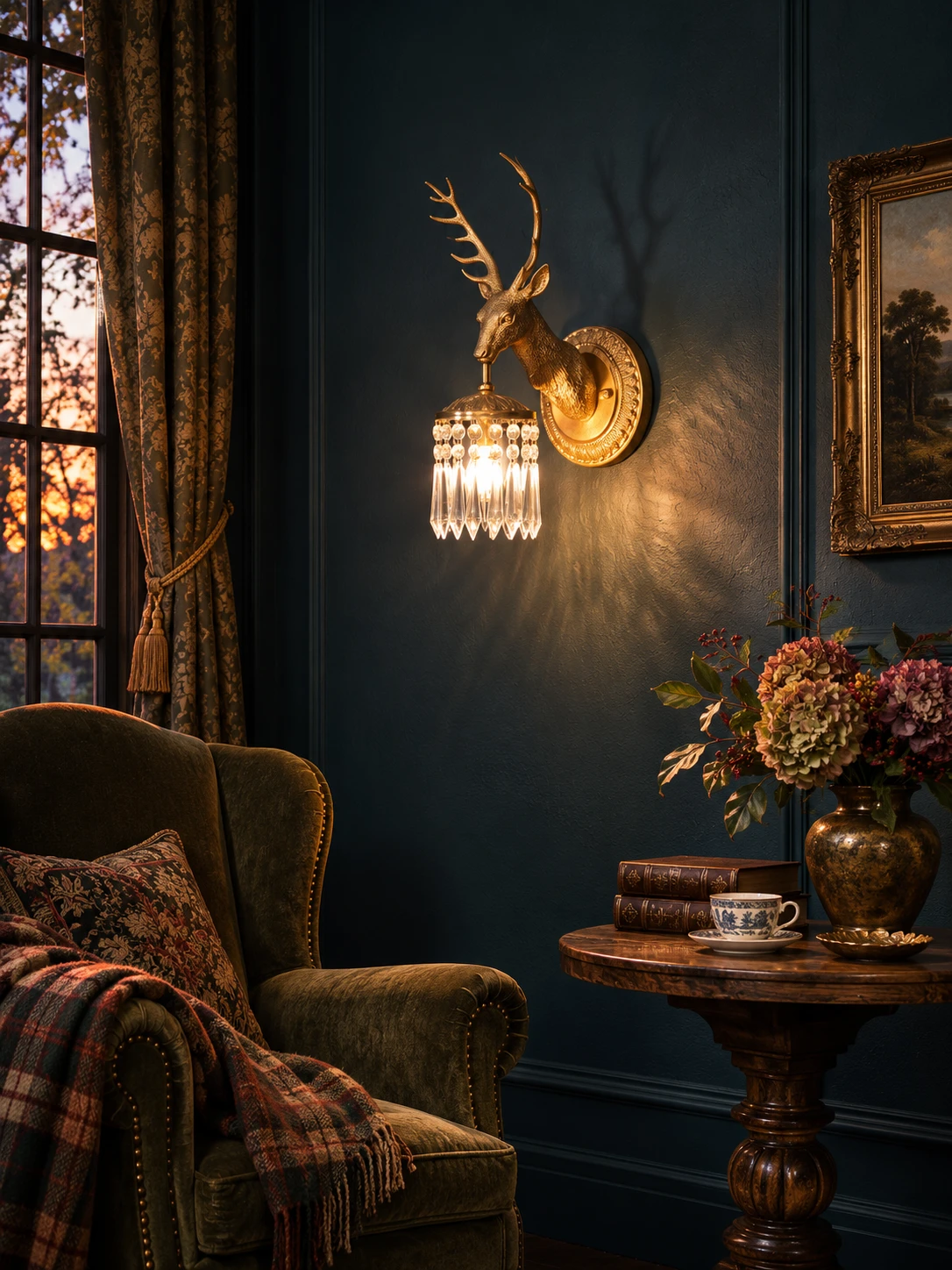
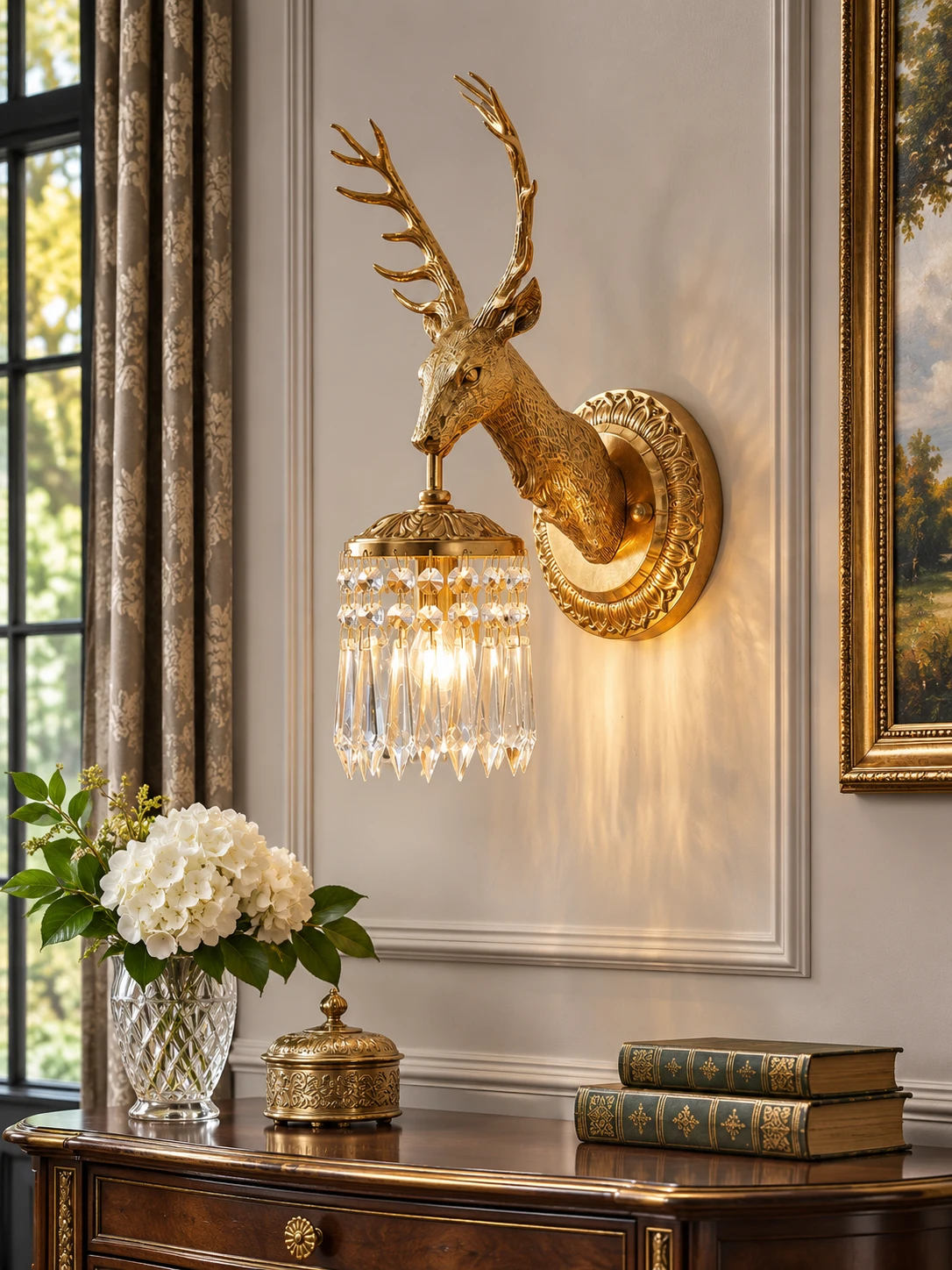
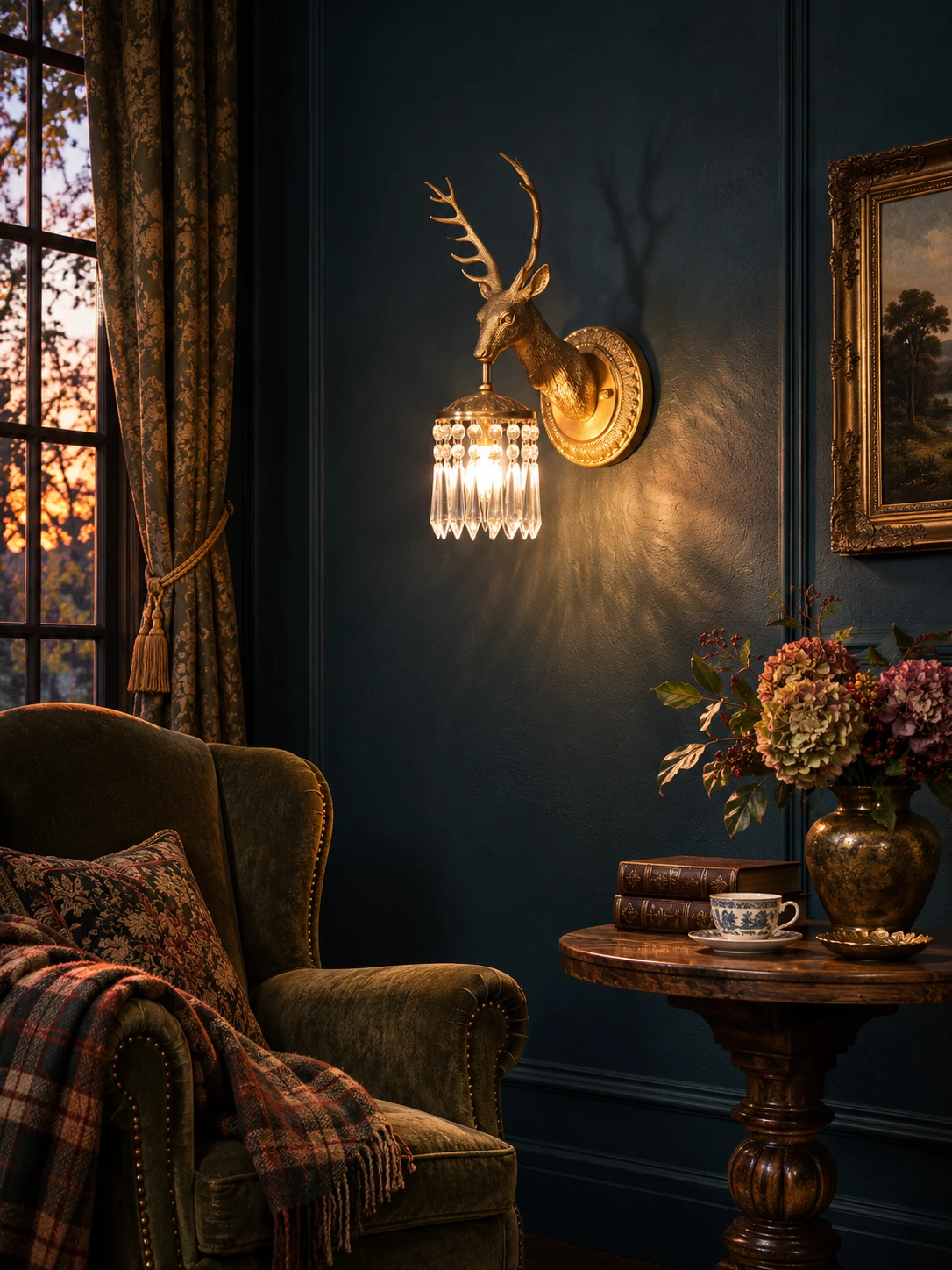
A hand-finished cast-brass stag head, antlers spread, is anchored to a fluted brass medallion. In its mouth sits a small candle cup edged with a cut-crystal fringe. Light from the cup is caught and refracted by the drops into the surrounding room
Highlights
Brass, crystal, and candle light
A polished-brass stag and clear crystal drops form a traditional wall sconce around a candelabra socket
01
Cast brass stag
The focal point is a detailed cast-brass stag head with antlers, hand-finished and set against the wall
02
Crystal drops
A cut-crystal fringe on the candle cup refracts light from the bulb into the room
03
Polished brass
The body is warm polished brass paired with clear cut-crystal drops
04
Candelabra socket
It takes one user-replaceable E12 or E14 candelabra bulb, not included, with warm white 3000K and a 25W maximum recommended
Specifications
Size and light
Depth
16 cm
Width
22 cm
Height
38 cm
Wall projection
16 cm / 6.3"
Light source
E12 / E14 candelabra socket, bulb not included, user-replaceable
Recommended bulb
LED E12/E14 candelabra, max 25W, warm white 3000K
Color temperature
Set by the bulb; warm white 3000K recommended
Dimming
With a dimmable bulb and a TRIAC dimmer
Voltage
AC 110–240V
Mounting
Hardwired wall-mount, standard junction box
IP rating
IP20, indoor dry locations only
Materials
Cast brass body, cut-crystal drops
Antler Crystal Wall Lamp
HOZO Installationsanleitung
Planen Sie Ihre Beleuchtung.
Raumweise Startwerte für Leuchtengröße, Montagehöhe, Abstand und Durchgangshöhe. Tippen Sie ein Kapitel an.
01
Esstisch
Größe und Mitte vom Tisch aus festlegen, dann die Sicht von jedem Sitz prüfen.
So messen
Tischlänge und -breite messen. Bei runden Tischen den Durchmesser nehmen.
Startbereich
Runde Leuchten: etwa 1/2 bis 2/3 der Tischbreite. Längliche Leuchten: 1/2 bis 2/3 der Tischlänge.
Platzierung
Die Leuchte über dem Tisch zentrieren, nicht zwingend über dem Raum.
Abstand
76–91 cm über der Tischplatte beginnen.
Bei langen Tischen wirken zwei kleinere Pendel oft natürlicher als eine übergroße Leuchte.
Vor dem Bohren
Eine Papierschablone an die Decke kleben und vom Türrahmen sowie sitzend prüfen.
MessenPlatte bis Unterkante
Hängehöhe76–91 cm
AusrichtenMitte des Tisches
02
Kücheninsel
Die nutzbare Insel messen und die Pendel auf der Mittellinie halten.
So messen
Nutzbare Länge und Breite der Insel messen.
Startbereich
Eine Linienleuchte: 1/2 bis 2/3 der Insel-Länge. Mehrere Pendel: erst den Durchmesser, dann die Anzahl wählen.
Platzierung
Pendelmitten gleichmäßig auf der Insel-Mittellinie.
Abstand
76–91 cm über der Arbeitsplatte. Äußere Pendel nicht an den Inselenden.
Die komplette Reihe mocken, nicht nur ein Pendel.
Vor dem Bohren
Drei Papierkreise über der Insel zeigen Abstandsprobleme schneller als ein einzelnes Muster.
MessenPlatte bis Unterkante
Hängehöhe76–91 cm
AusrichtenGleiche Mitten
03
Raummitte
Länge plus Breite ergibt den Startdurchmesser. Deckenhöhe und visuelle Schwere machen die Entscheidung fertig.
So messen
Raumlänge und -breite in Metern plus fertige Deckenhöhe.
Startbereich
Länge + Breite (m) × 8,3 ergibt einen üblichen Startdurchmesser in cm. Beispiel: 3,7 + 3,0 → ca. 56 cm.
Platzierung
Die architektonische Mitte nur nutzen, wenn sie vom Eingang und vom Möbelplan her Sinn ergibt.
Abstand
Mindestens 2,10 m lichte Höhe unter dem tiefsten Punkt im Laufbereich.