Asociați textul cu o imagine pentru a vă concentra asupra produsului, colecției sau articolului de blog ales. Adăugați detalii despre disponibilitate, stil sau chiar oferiți o recenzie.
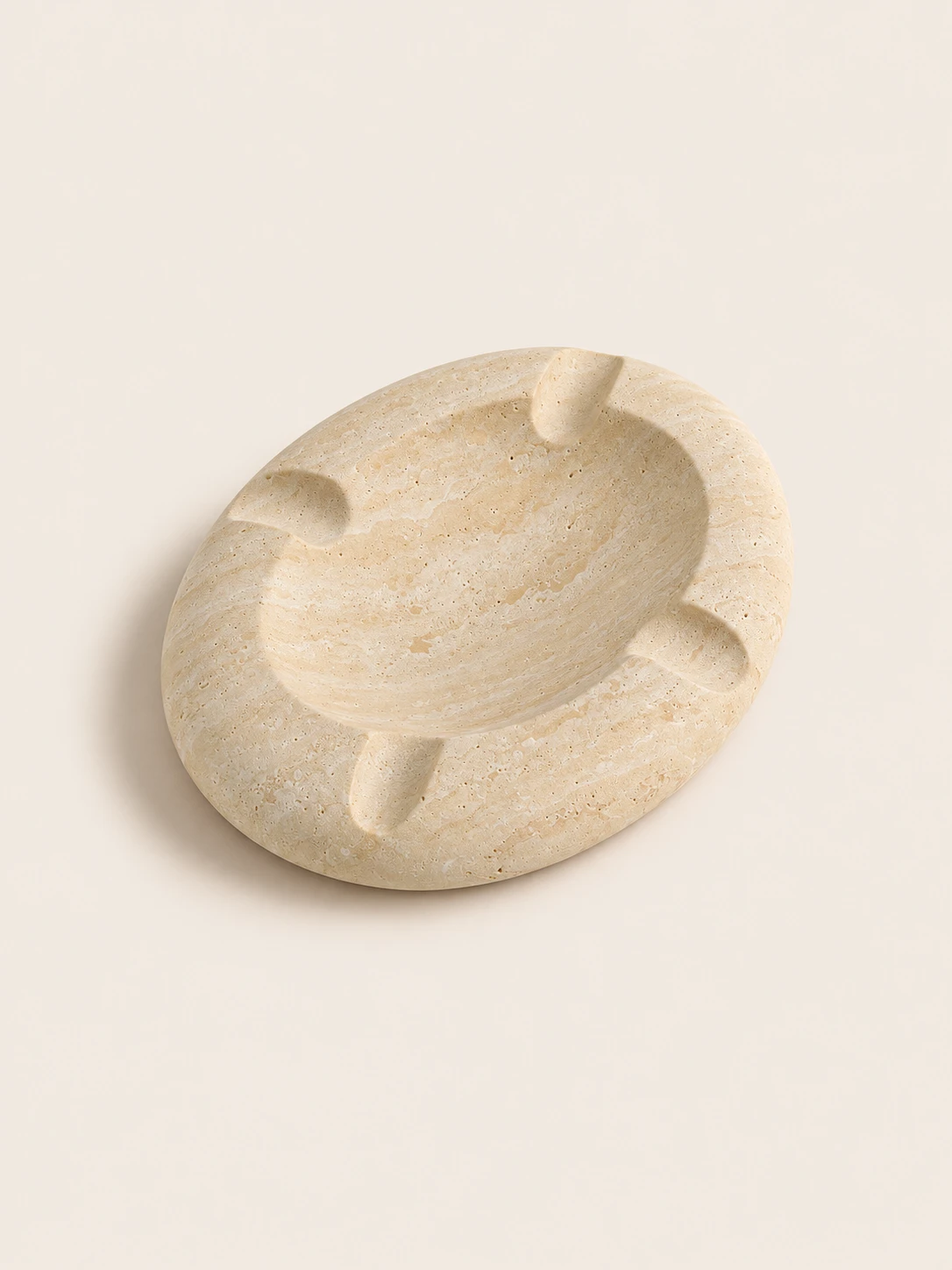
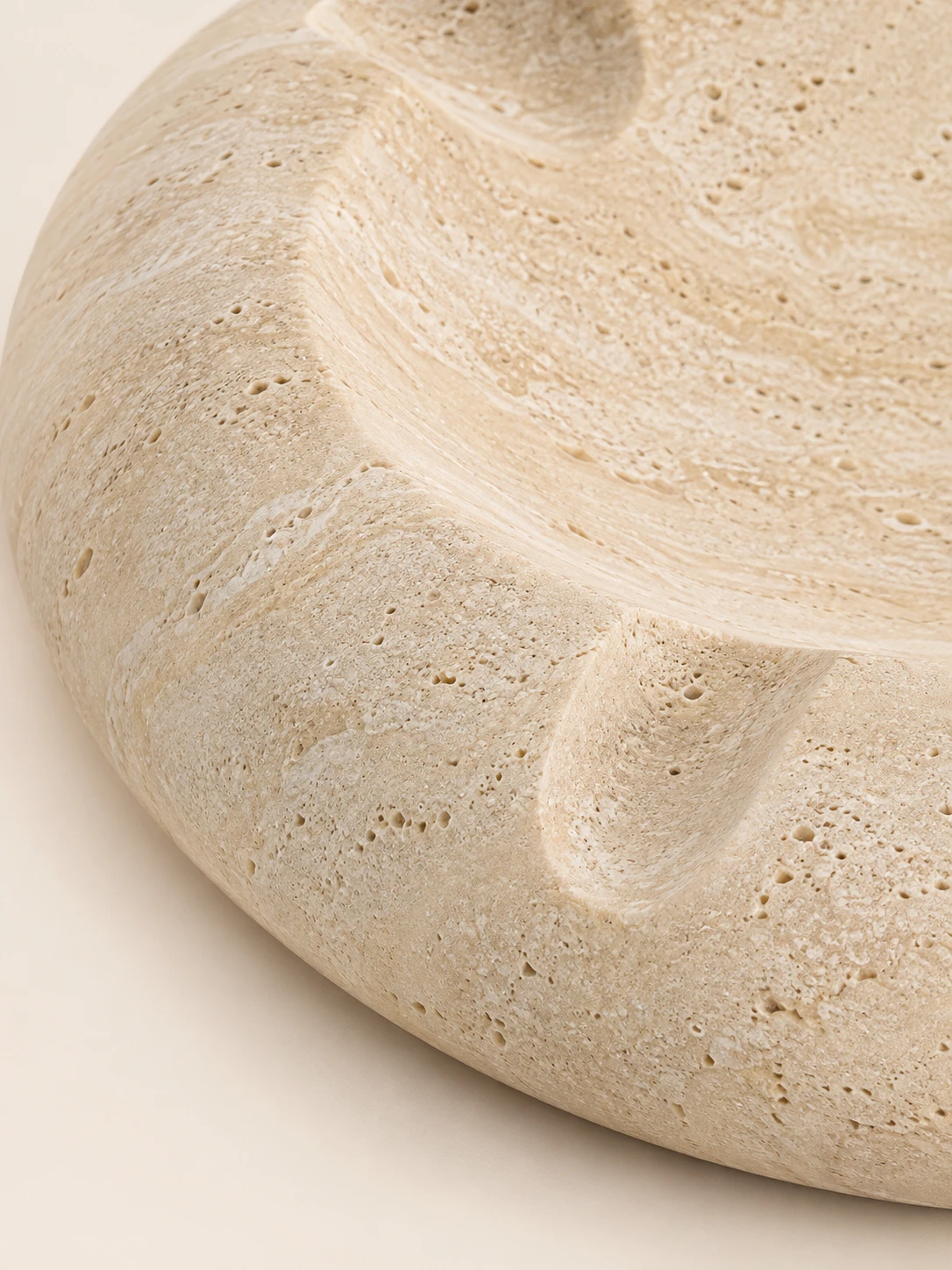
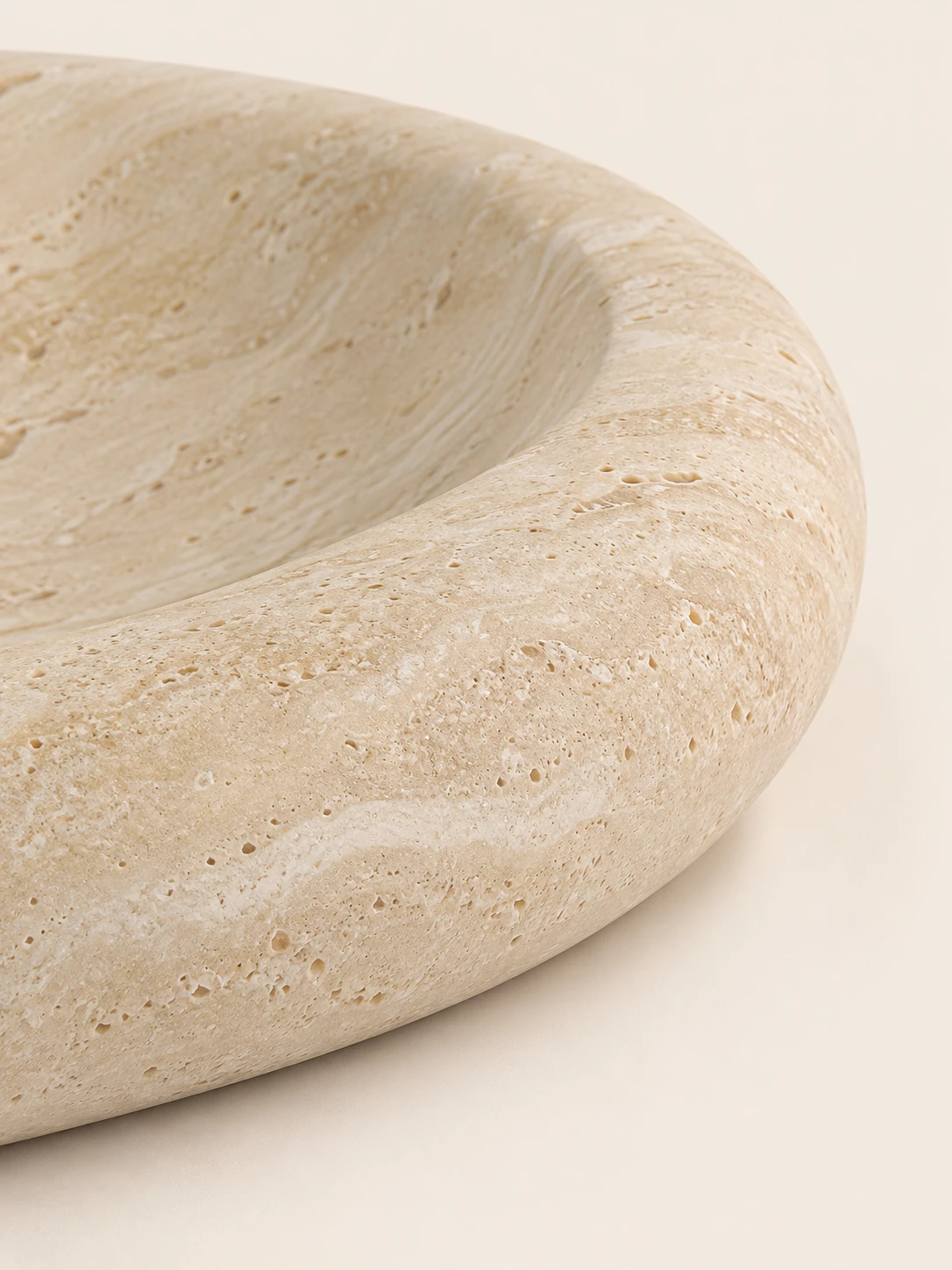
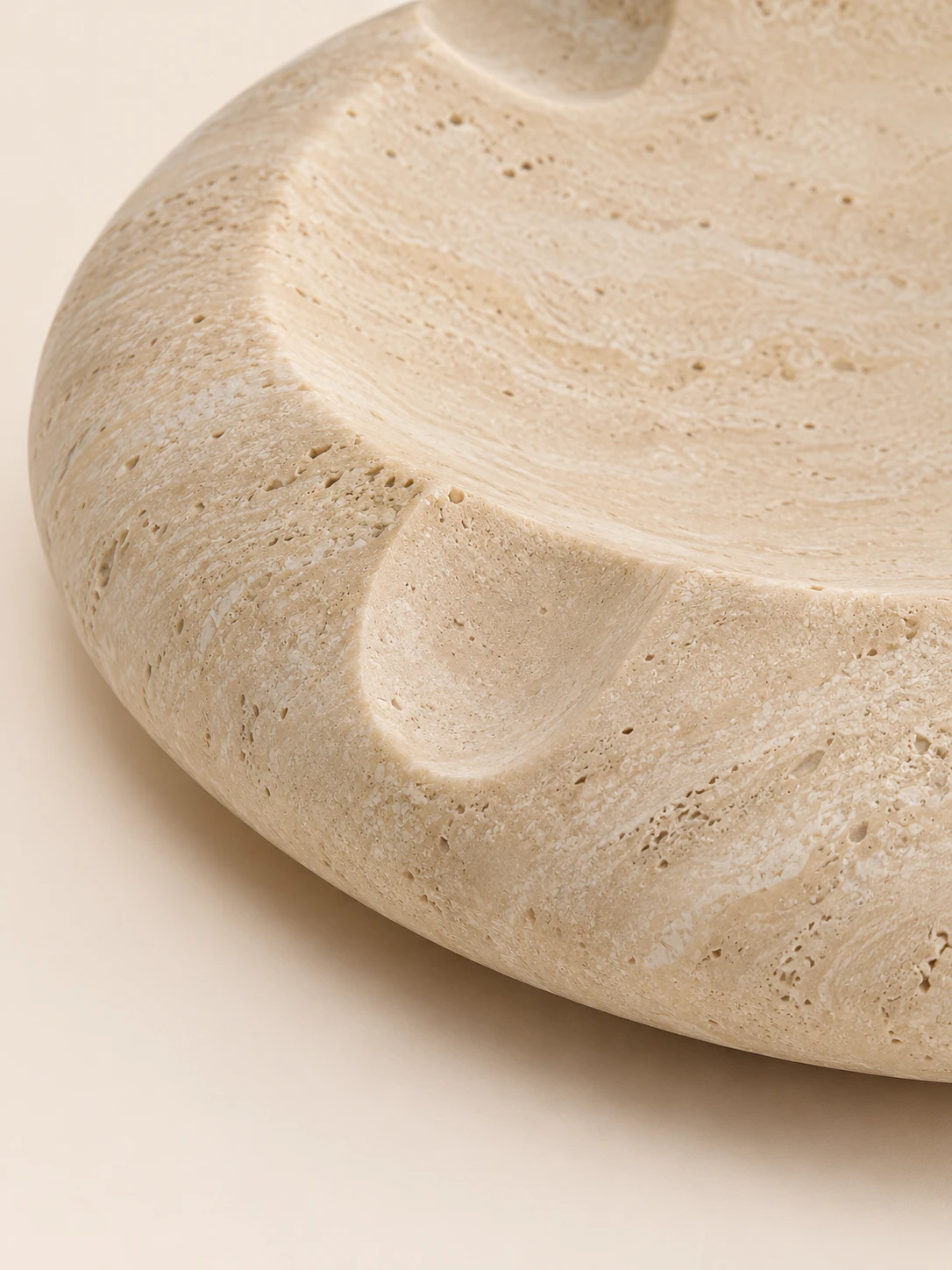
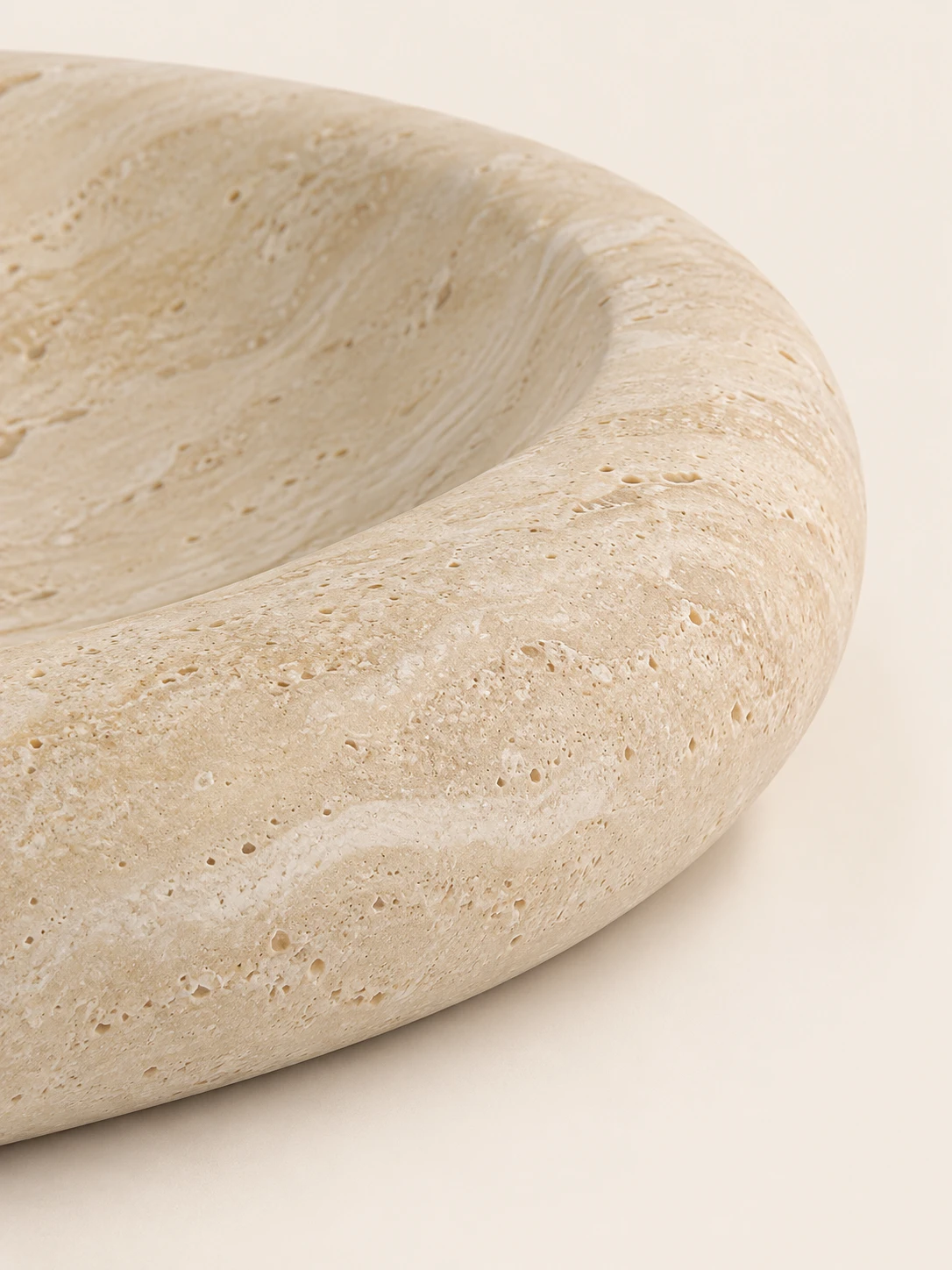
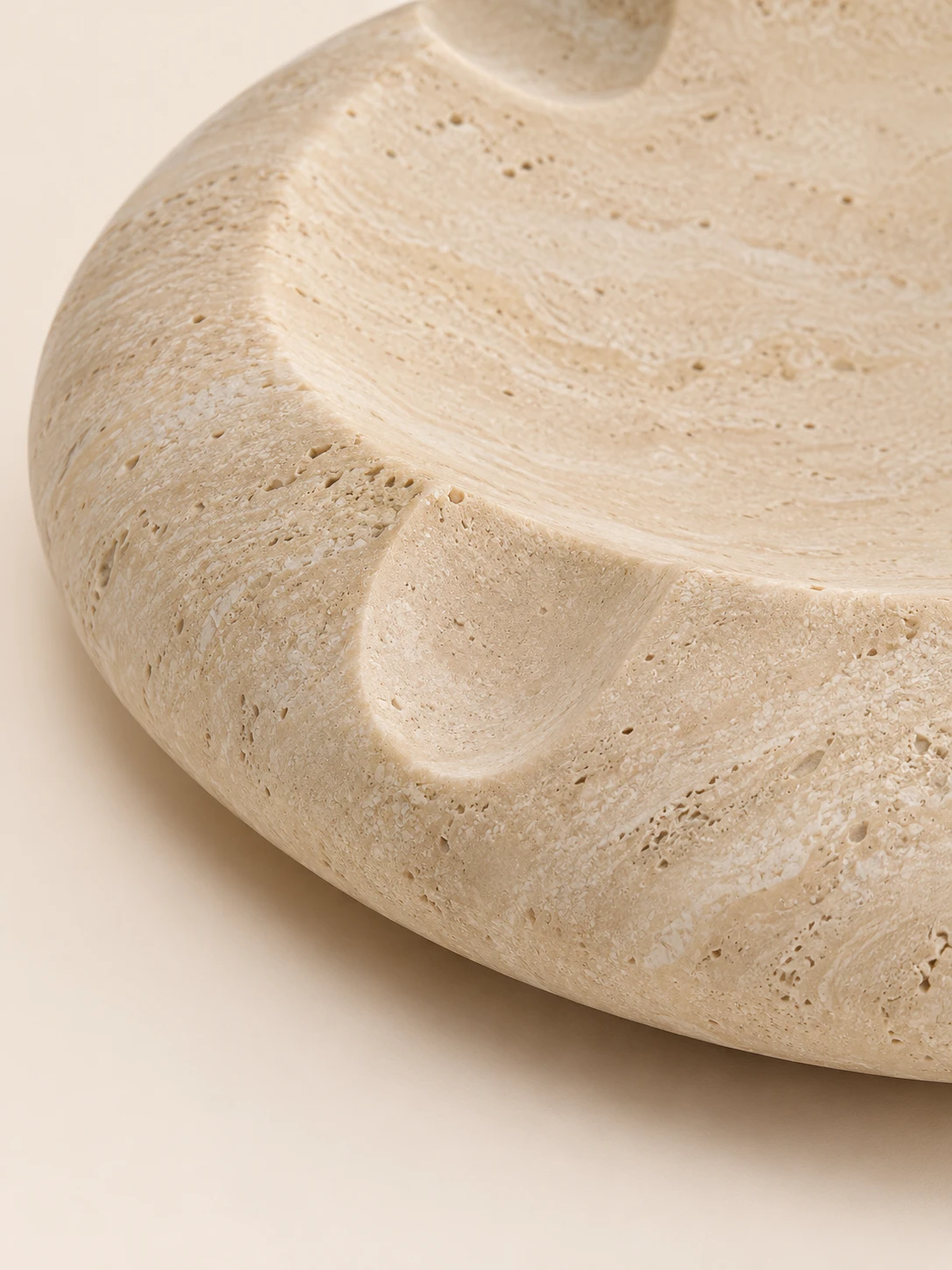
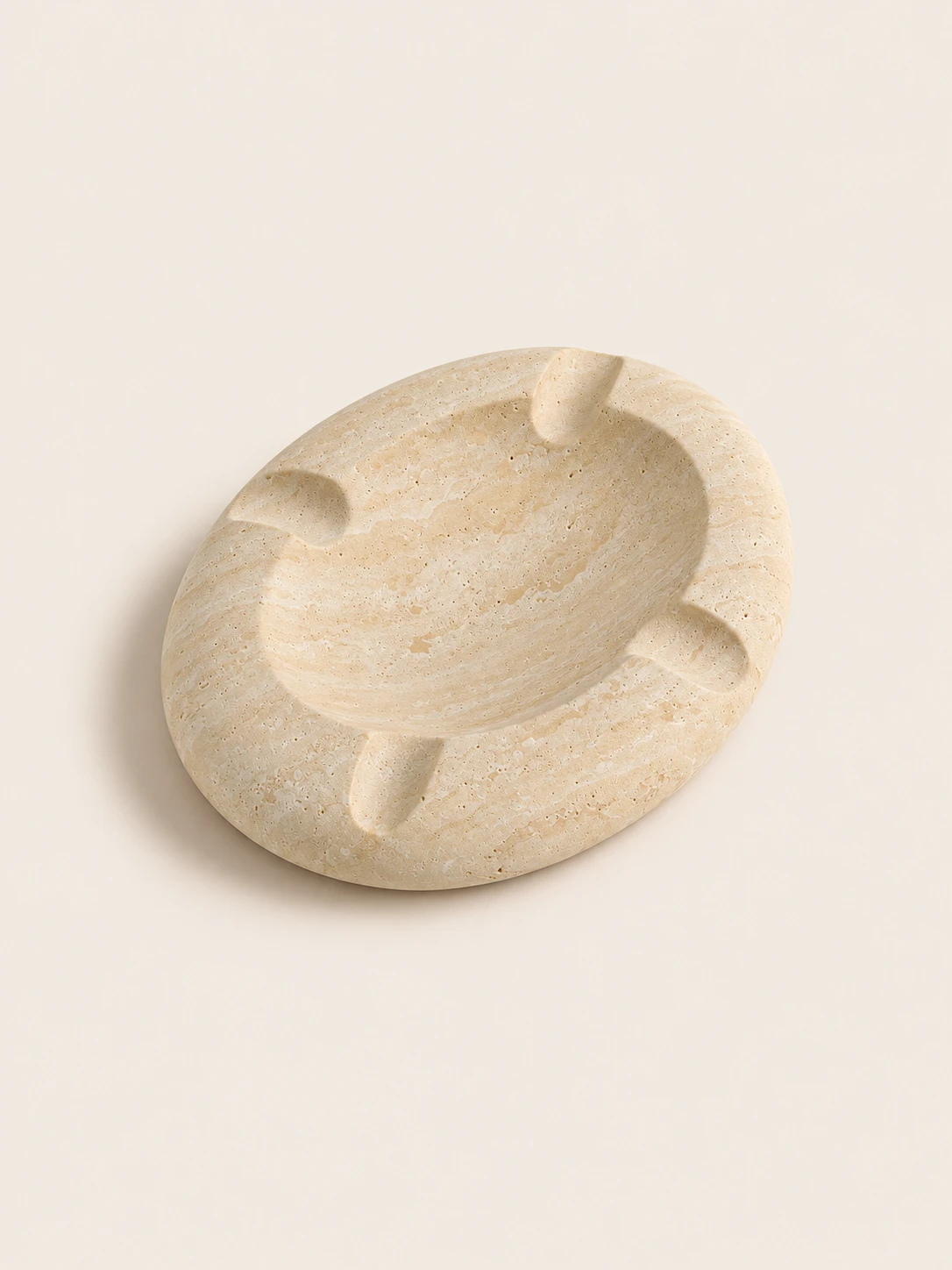
Three photographs follow the rim into the basin, the notch in the rim, and the outer curve down to the base
01The pale, pitted rim rounds inward and drops into the shallow basin, with faint veins running across the stone. A small scooped notch interrupts the rim near the foreground02The outer contour is a thick, continuous curve that swells outward and settles toward the base. Above it, the basin’s inner slope shows the same cream stone and fine surface pits03A rounded notch is cut into the rim, its hollow meeting the surrounding stone in a smooth edge. Beyond it, the rim curves away into the basin
Stone catch-all tray
Beige Travertine
Catch-all Tray
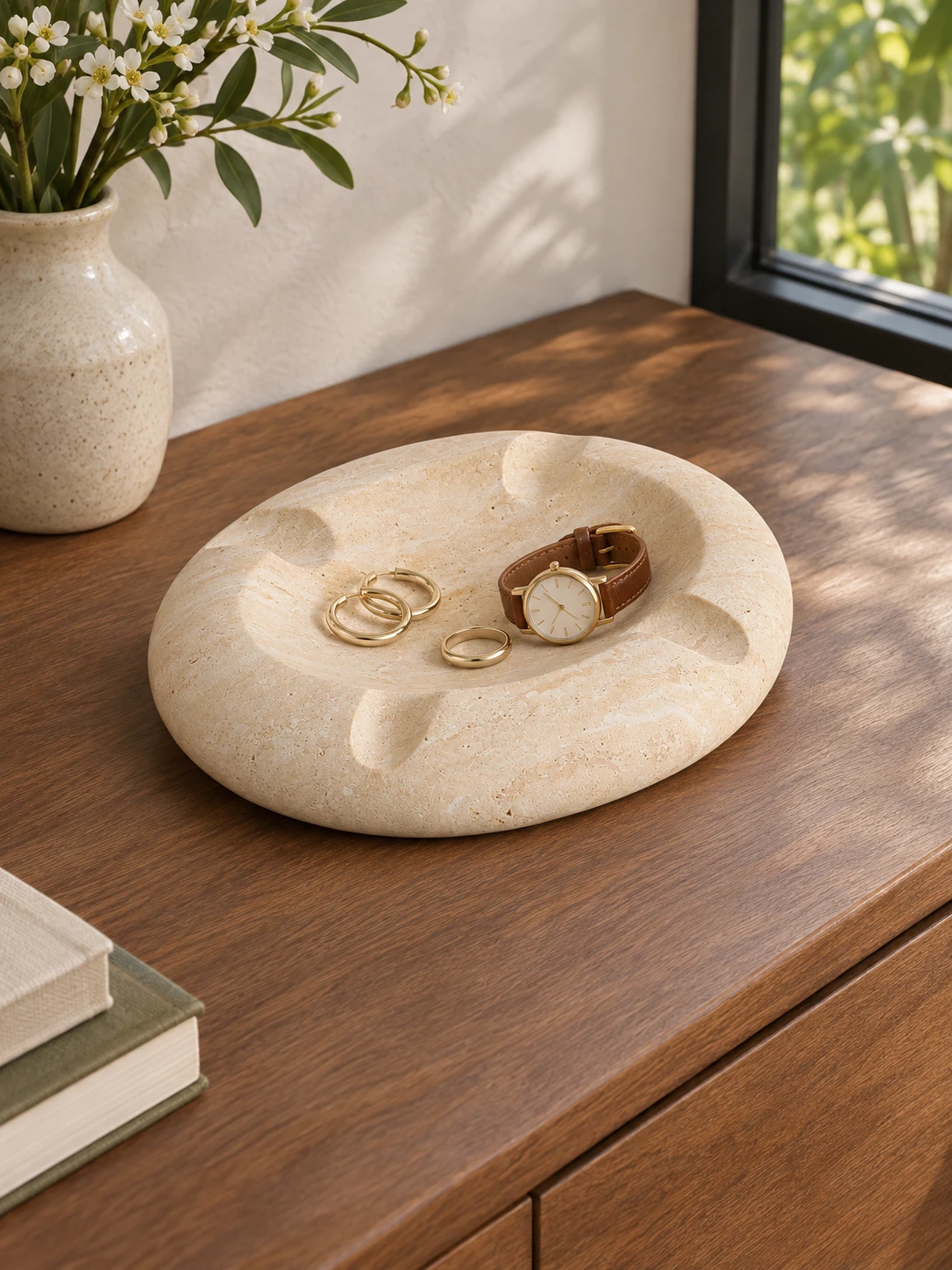
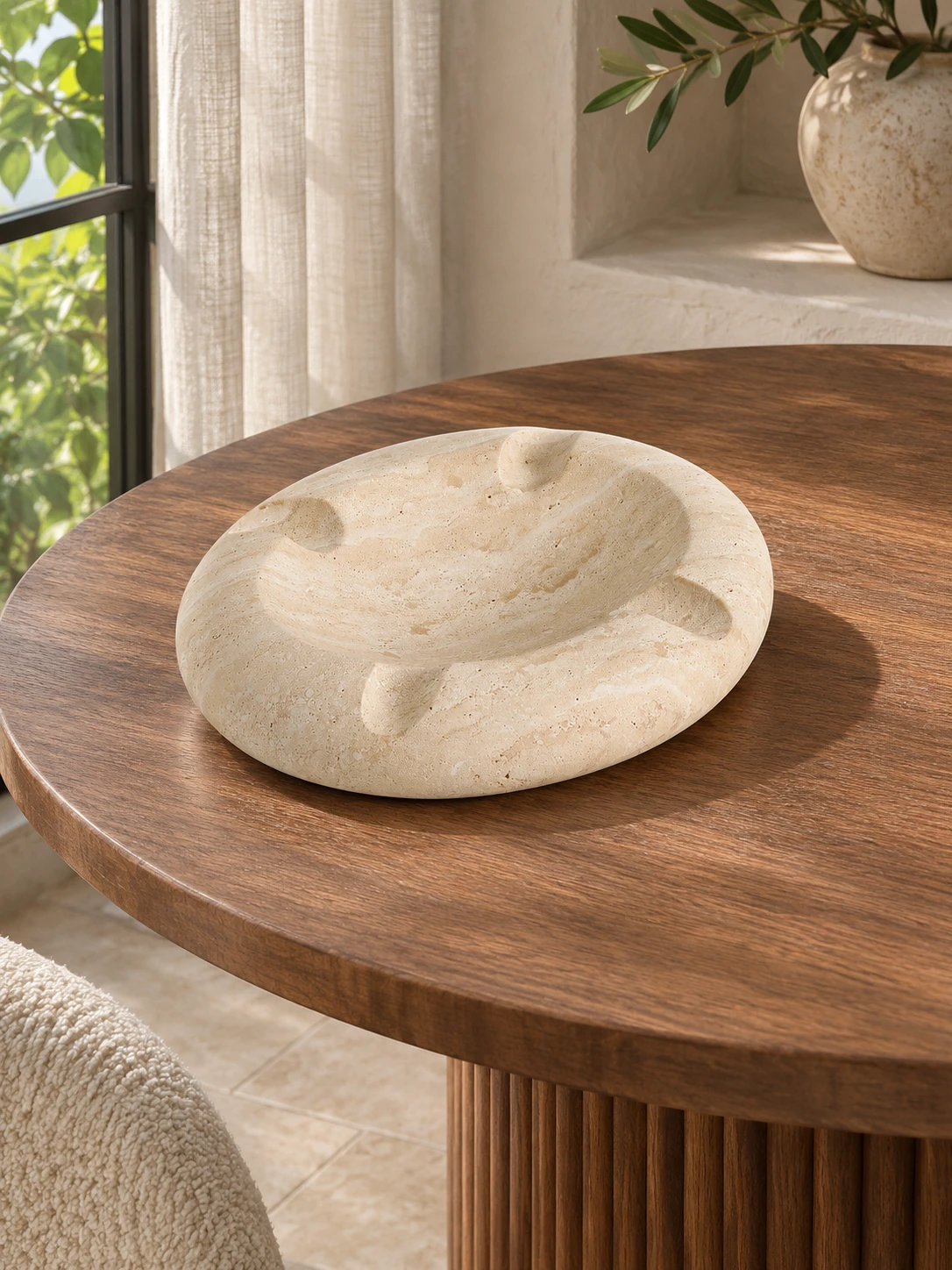
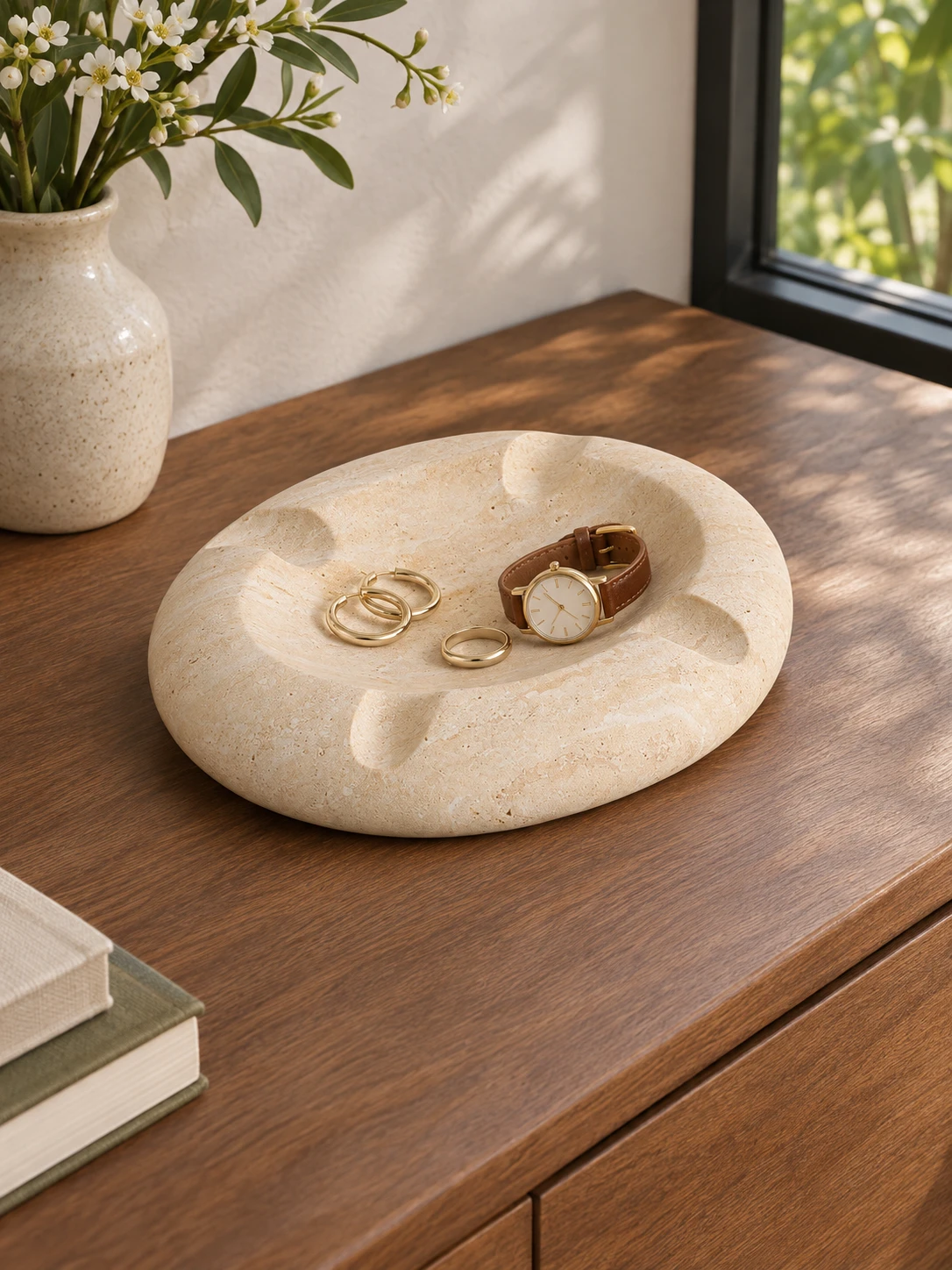
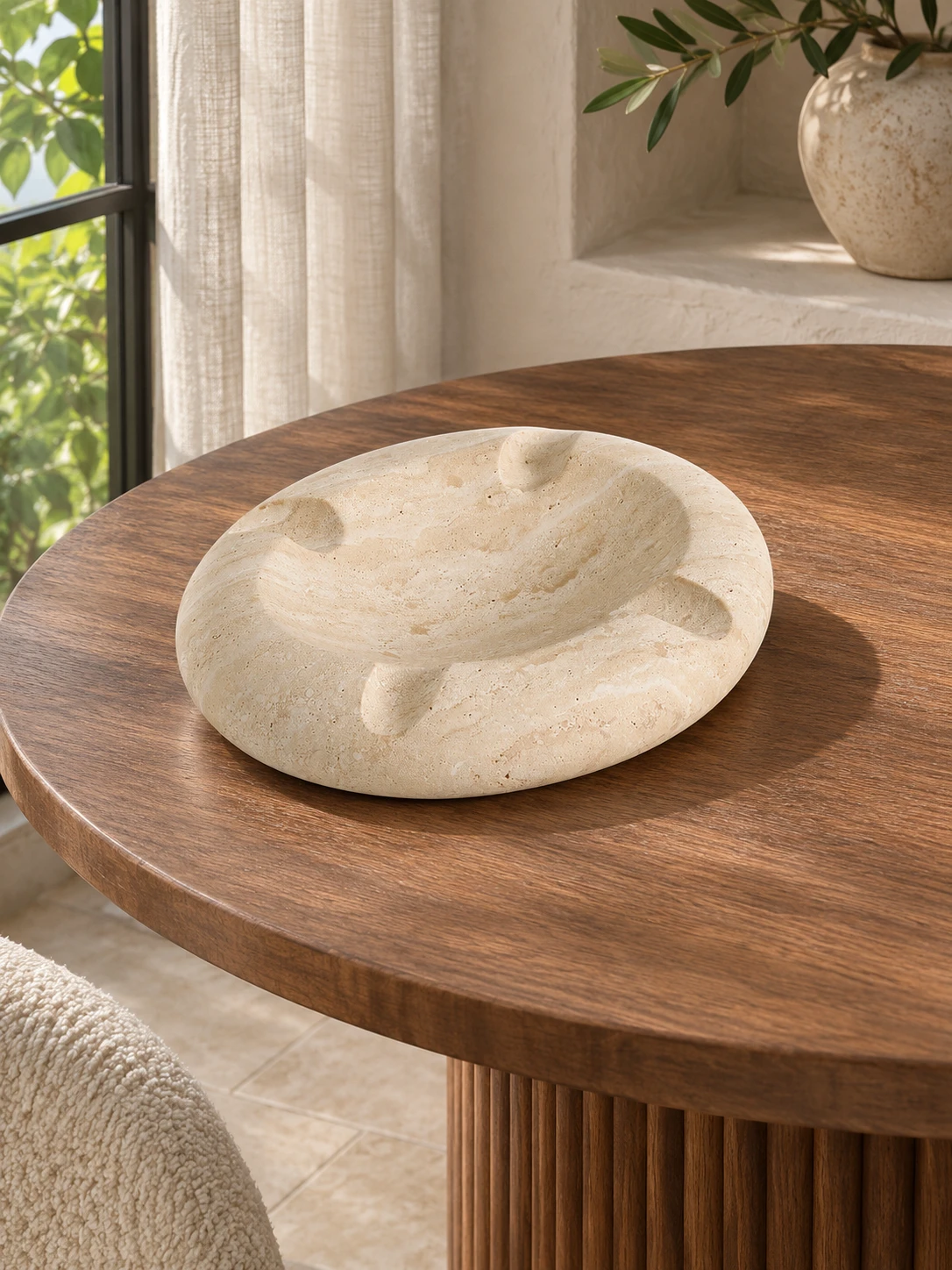
Sculpted from natural beige travertine, the Aria Catch-all Tray has soft organic contours, subtle rim notches, and a smooth basin. Warm neutral tones and raw stone texture suit an entryway console, a bedside nightstand, or a living room coffee table. It holds keys, jewelry, and daily essentials, or stands alone as a decorative display
Highlights
Stone with a soft outline
A hand-carved beige travertine tray shaped with organic contours and a polished surface
01
Natural travertine
Made from beige travertine, with unique natural veining and a raw stone texture
02
Organic contours
Soft sculpted edges and subtle rim notches frame a tactile, smooth basin
03
Beige travertine finish
Hand-carved and hand-polished in a warm neutral beige
04
Compact proportions
It measures 20 cm long, 15.5 cm wide, and 4 cm high
Specifications
Size and details
Length
× ×: 7.9″ (20 cm)
Width
× ×: 6.1″ (15.5 cm)
Height
× ×: 1.6″ (4 cm)
Weight
Approx. 0.7 kg / 1.5 lbs
Material
Travertine
Finish
Beige Travertine
Craft
Hand-carved, hand-polished
Recommended use
Catchall tray, vanity tray, or decorative display
Food safety
Decorative use only (not food safe)
Care
Wipe with a damp cloth. Avoid harsh chemicals and apply marble sealer regularly
Package includes
1 × stone tray
Aria Catch-all Tray
HOZO Installationsanleitung
Planen Sie Ihre Beleuchtung.
Raumweise Startwerte für Leuchtengröße, Montagehöhe, Abstand und Durchgangshöhe. Tippen Sie ein Kapitel an.
01
Esstisch
Größe und Mitte vom Tisch aus festlegen, dann die Sicht von jedem Sitz prüfen.
So messen
Tischlänge und -breite messen. Bei runden Tischen den Durchmesser nehmen.
Startbereich
Runde Leuchten: etwa 1/2 bis 2/3 der Tischbreite. Längliche Leuchten: 1/2 bis 2/3 der Tischlänge.
Platzierung
Die Leuchte über dem Tisch zentrieren, nicht zwingend über dem Raum.
Abstand
76–91 cm über der Tischplatte beginnen.
Bei langen Tischen wirken zwei kleinere Pendel oft natürlicher als eine übergroße Leuchte.
Vor dem Bohren
Eine Papierschablone an die Decke kleben und vom Türrahmen sowie sitzend prüfen.
MessenPlatte bis Unterkante
Hängehöhe76–91 cm
AusrichtenMitte des Tisches
02
Kücheninsel
Die nutzbare Insel messen und die Pendel auf der Mittellinie halten.
So messen
Nutzbare Länge und Breite der Insel messen.
Startbereich
Eine Linienleuchte: 1/2 bis 2/3 der Insel-Länge. Mehrere Pendel: erst den Durchmesser, dann die Anzahl wählen.
Platzierung
Pendelmitten gleichmäßig auf der Insel-Mittellinie.
Abstand
76–91 cm über der Arbeitsplatte. Äußere Pendel nicht an den Inselenden.
Die komplette Reihe mocken, nicht nur ein Pendel.
Vor dem Bohren
Drei Papierkreise über der Insel zeigen Abstandsprobleme schneller als ein einzelnes Muster.
MessenPlatte bis Unterkante
Hängehöhe76–91 cm
AusrichtenGleiche Mitten
03
Raummitte
Länge plus Breite ergibt den Startdurchmesser. Deckenhöhe und visuelle Schwere machen die Entscheidung fertig.
So messen
Raumlänge und -breite in Metern plus fertige Deckenhöhe.
Startbereich
Länge + Breite (m) × 8,3 ergibt einen üblichen Startdurchmesser in cm. Beispiel: 3,7 + 3,0 → ca. 56 cm.
Platzierung
Die architektonische Mitte nur nutzen, wenn sie vom Eingang und vom Möbelplan her Sinn ergibt.
Abstand
Mindestens 2,10 m lichte Höhe unter dem tiefsten Punkt im Laufbereich.